
Freedom is a concept many of us desire, but what is freedom really and what does that have to do with therapeutic reflexology? Today, we’ll explore some footsteps to freedom.
Freedom is the ability to do what you want when you want without being restricted by other people. It is a perception that becomes very prominent by some employees when they feel restricted and limited by an employer, especially when they need some time off to deal with a certain matter, yet the employer refuses them the time off.
On the other hand, the lyrics in the song “Me and Bobby McGee” includes the following thought-provoking phrase about freedom: “Freedom’s just another word for nothing left to lose.” Quite a statement, but so true in many instances. Often an employee desires to leave full-time employment in order to have freedom to go where he or she pleases when they want and without having to ask an employer’s permission, yet, when taking the step of leaving full-time employment many often realise that not being employed is not necessarily freedom, because if there is a lack of income, freedom is also not possible. When a person leaves employment and no longer earns a fixed monthly salary, the realisation often sets in that freedom is not merely the absence of answering to an employer, but also the ability to have enough income to not restrict coming and going.
Freedom is much more than not answering to another person, it is also the ability to have the means to do what you want when you want.
In my working career, I had the privilege of being employed by different employers, being self-employed, being a freelancer and being a small business owner of various entities. Each of these employment statuses comes with advantages as well as disadvantages; freedom and restrictions. Eventually, each person needs to make a decision as to what they want to do with their lives, how they want to do it and then attempt to make it a reality, whether this means employment, self-employment, freelancing or owning your own business venture(s).
Life does not owe us anything, so thinking that one form of employment is easier than another, is a myth. Each form of employment or income generation possibilities come with its own challenges, its own advantages, its own benefits, its own freedoms, and its own restrictions and limitation.
I look at the younger generation, especially in South Africa, and I realise that I must be old school because there is almost this sense of entitlement going around at the moment. An entitlement that life owes them something. An entitlement that the government should provide every person with a job. An entitlement that they want to earn huge salaries without putting in the working hours; earning exorbitant income without first obtaining the necessary qualifications, skills, and experience. I see a generation that obtain business and even entrepreneurship qualifications, but when they graduate there is still a sense of entitlement; an entitlement that somebody, especially government, should provide them with jobs instead of taking the initiative and creating jobs. Even business students graduate with a mindset of wanting to find a good job with a fixed salary and so-called security instead of being entrepreneurial and creating jobs for themselves and for others and in the process doing something about the huge unemployment crisis in the country and the world.
This mindset, to me, is not freedom. If you go through an educational system and earn a qualification, even an entrepreneurship qualification, but then want to go work for somebody else instead of becoming entrepreneurial, seems very restrictive to me. However, that is a personal opinion and every person is permitted to live life as they want to.
To me, freedom is the ability to know who you are, why you have been born and why you are on this planet earth at this time and then finding a way to live out your destiny. What is freedom to you? You may see freedom differently than I do and you are allowed to see it differently; each of us is ultimately unique and have different opinions.
Let me share a little bit of my career journey with you. I grew up on a dairy farm and after leaving the farm, I applied for more than 200 positions and I was turned down for them all. To understand that, you need to understand a bit about the history of South Africa. A huge injustice was done to many people in South Africa when Apartheid was prominent in South Africa. In 1994, Apartheid was officially abolished with the first truly democratic elections and the election of Nelson Mandela as the first black president of the country. With the abolishment of Apartheid, came some challenges for white males (like myself) in this country, because we are now blamed for Apartheid even though Apartheid was established years before we were even born.
I matriculated in 1995 and in those years the universities provided bursary prospectuses and literally printed words next to certain available bursaries to the effect of: “White males need not apply!” Today, a normal phrase when seeing a job opportunity is: “Employment Equity candidates only” or “for designated groups only”, which basically means that the job is not available for any white man. The South African Employment Equity Act (Act 55 of 1998 as amended) asserts that discrimination in the workplace is not to be tolerated, yet affirmative action (against white people, especially white men) is allowed and not seen as unfair discrimination.
That is said to get to the following point. After applying for more than 200 positions and being rejected due to skin colour, I had a choice to make. Either I could sit and feel discriminated against (because it is very important to realise that just because the Employment Equity Act says that affirmative action is not unfair discrimination, it does not mean that white men are not experiencing unfair discrimination when being rejected due to your skin colour and realising that affirmative action is nothing other than reverse Apartheid) or I could do something about the situation. I decided that if I sit and feel sorry for myself, I would not be able to earn an income and I was not willing to live with an entitlement mentality waiting for somebody else to take care of me. I was, therefore “forced” into entrepreneurship and generating income for myself; something I am very glad about.
Today, I realise that entrepreneurial ventures, own business, freelancing, and self-employment come with its own challenges, but it also comes with tremendous freedom of being able to answer to yourself; sometimes the worst employer you can ever have because we tend to be very hard on ourselves. Working for myself and not having to answer to an employer and not having to beg for time off in order to deal with a personal matter, is one of the best feelings of freedom for me. Being able to set my own schedule and book time off when I don’t feel like working or booking time off to work on my studies or booking family time off, is what I see as freedom.
That is all good and well, but what does that have to do with therapeutic reflexology?
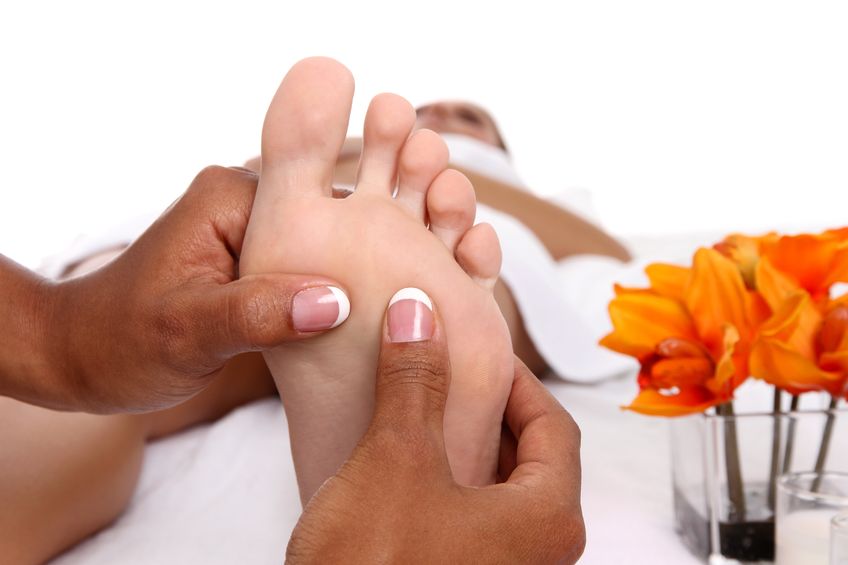
Firstly, as a therapeutic reflexologist, I am in private practice and I work with patients out of choice and not a necessity. I love working with people, helping people and (for those of you who can never ever imagine this) yes, even working with people’s feet. I absolutely love the healthcare modality of therapeutic reflexology and have been practicing reflexology since 2003 and therapeutic reflexology since 2016. For me, it is a privilege to work with people and an absolute honour being entrusted with their feet and bodies to help them within the scope of practice for therapeutic reflexology. It is a choice and something I do because I love to do it and not a burdened form of employment done just because it has to be done due to an employer expecting it. The benefit of loving what I do is the fact that people can usually pick it up in the treatment session and they realise that I am living out my passion and therefore helping them through therapeutic reflexology is by choice.
Secondly, you may experience certain physical and emotional challenges at the moment that are preventing you from doing what you want and being unable to experience freedom in your life. Therapeutic reflexology is the ideal healthcare modality to consider to deal with your physical and emotional imbalances in order to give your body the chance to heal itself, or at least attempt to balance itself from the inside out, in order for you to experience freedom in your life as well. I know how it feels to want to do something, but your physical or emotional state is preventing it; overcoming this is needed and therapeutic reflexology is one of the best modalities to consider to achieve this with.
Thirdly, stress is the illness of the 21stcentury and many conditions are caused by stress and even more are worsened by stress. Freedom in your life is usually not possible if you are highly stressed and unable to enjoy life. Therapeutic reflexology is the ideal healthcare modality to use to deal with your high-stress levels in order for you to be able to enjoy freedom in your life.
Have you ever considered a therapeutic reflexology session in order to walk with footsteps to freedom in your life? It may be time to consider it, but always ensure that you make use of a professionally qualified and registered therapeutic reflexologist that is officially regulated by the Allied Health Professions Council of South Africa; the only statutory body in the country that can provide a legal right for therapeutic reflexologists to practice. You deserve the best form of treatment, thus do not settle for non-registered therapists.
You deserve the best in order to enjoy footsteps to freedom in your life!
—
Christo A. Scheepers: Therapeutic Reflexologist
Dip.T.R.(Cum Laude) [IARAMT]
AHPCSA: A11945
Pr. No.: 1080000737453
Tel. 072-800 7243