Asking your Therapeutic Reflexologist questions during the National Lockdown is a good passing of time, especially those questions about Therapeutic Reflexology that you have not asked yet. In today’s post, we’ll answer some questions that were asked to me since lockdown has begun; some are personal, but I’ll gladly answer in this post.
- What are you doing as a Therapeutic Reflexologist during the National Lockdown?
As a Therapeutic Reflexologist registered with The Allied Health Professions Council of South Africa (AHPCSA), I am a healthcare provider offering and essential service. I have thus been “on-call” during the national lockdown to attend to any emergency patients that are in need of therapy, especially with regards to pain and cancer patients.
Apart from being “on-call”, I have been using the time at home to do all the things I never get time to actually do. I painted my house and completed that last week, so this week I shall spend some time with my family, write a module guide for a business school and work on my Ph.D.-degree thesis. Trying to use the time as productively as possible.
- As a Therapeutic Reflexologist, do you only work on the feet?
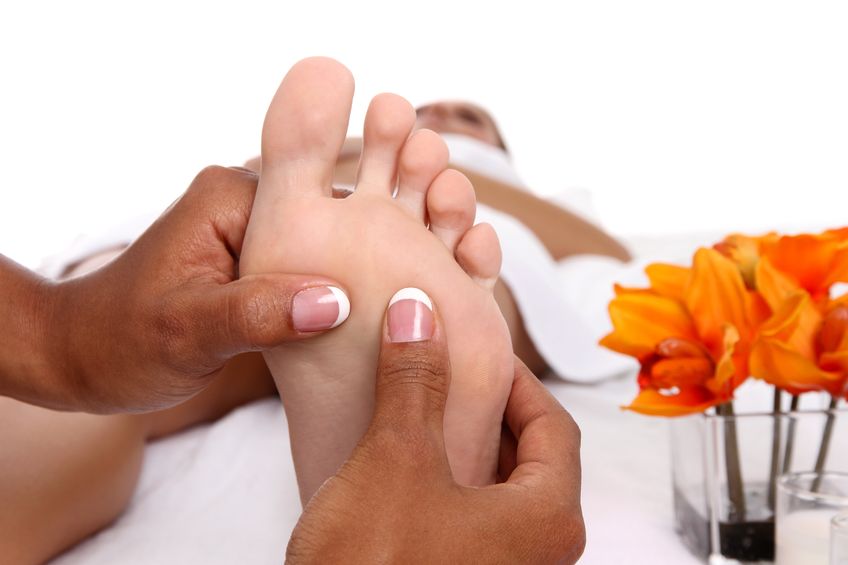
No, I offer a full range of Therapeutic Reflexology services that includes working on the soft tissue of the body by stimulating the reflexes (nerve endings) on the feet, hands, face, ears, and body as per the Scope of Practice the AHPCSA provides to Therapeutic Reflexologists. I also offer both manual reflexology as well as electronic Vacuflex Concepts reflexology.
Therapeutic Reflexologists may have different approaches to treatment so I cannot speak on how each therapist approaches treatment, so from a personal perspective, let me say the following. I always begin Therapeutic Reflexology treatments by working on a patient’s feet. It is a non-invasive approach and offers the opportunity to work on the reflexes that are located on larger areas on the feet than on other parts like the hands or the ears. The reason the patient is consulting with me for therapy would guide the approach used and I may thus add Therapeutic Reflexology on other parts of the body as well in combination with the therapy on the feet.
Sometimes a patient prefers special focus on a specific body part like the hands or the ears instead of on the feet. In such instances, I would focus on those body parts, but usually only after working on the feet initially, unless there is a reason for avoiding the feet.
Each patient is approached as an individual and there is no set rules for treatment as it largely depends on the requirements for the individual patient after completion of a case history and consultation to determine the reason for the visit.
- Do you not find it terrible to work on a patient’s feet?
No, not at all. If it was a problem for me to work on a patient’s feet, then I would obviously not be in a profession as Therapeutic Reflexologist. I find the human foot very fascinating and truly enjoy my profession as Therapeutic Reflexologist by having the opportunity to work on a patient’s feet and body as a registered healthcare provider. It is such an awesome privilege being entrusted with the feet and bodies of patients and it has always been a truly humbling experience every time I have the opportunity to work with a patient.
- How many Therapeutic Reflexology sessions are needed?
That is a difficult question to answer because each patient will react differently to treatment. Your body may react differently to treatment than the next patient’s body. Let’s just say that you should be prepared to receive up to 10 treatment sessions. It sometimes take 8 to 10 sessions for you to see the desired results, but some patients are very fortunate and may experience results after 3 or 4 and sometimes after the very first session. Each person is different, so there are no clear guidelines as to the number of sessions that you may need.
Sometimes patients do not experience the desired results, but they may experience a relief in other symptoms that improves their quality of life in the midst of the original condition still remaining present. You will only know how your body will react to treatment once you have experienced the first treatment. So do not hesitate to contact your Therapeutic Reflexologist for an initial consultation.
- My feet are ticklish and very sensitive; will Therapeutic Reflexology be uncomfortable?
No, not at all. Therapeutic Reflexology is not ticklish; the only part that may tickle slightly is when your feet are cleaned and disinfected in the beginning of your session, but the actual treatment makes use of sufficient pressure to not result in any tickling so you do not have to fear that it will be a session of tortured tickling.
Your feet may be sensitive and when any areas are out of balance, those areas may be sensitive, sore or even painful. However, the treatment is not supposed to be painful. There are two different schools of thought on this. One school believes that if your treatment is not painful, then it is not effective. The other school believes that treatment does not have to be painful in order to be effective. Personally, I hold to the latter approach. I do not believe you have to experience an hour treatment of pain in order to see results. Based on past experience, I believe that my approach is correct as fear for the next painful pressure point will result in your body being in fight-or-flight mode instead of in a state of relaxation, which is ultimately needed for your body to relax and secrete the necessary chemicals like endorphins to work on the imbalances from the inside.
Do not be afraid to speak to your Therapeutic Reflexologist during the treatment in order for the pressure to be adjusted as needed in order to avoid tickling and severe pain. Therapeutic Reflexology is meant to be a very relaxing treatment.
- Will you continue to practice after the national lockdown is lifted?
Yes, of course. I love my profession as a Therapeutic Reflexologist and will continue practicing after the lockdown. You are welcome to make your appointments.
- Did the national lockdown change the way you will be practicing Therapeutic Reflexology in the future?
No, not at all. I have always practiced extreme hygiene in my practice and between patients and what the Coronavirus and COVID-19 avoidance recommends, have always been practiced. Even during the water restrictions when we were told not to wash our hands, but to instead make use of hand sanitizers, as a Therapeutic Reflexologist I have not stopped washing my hands between patients, but made use of both handwashing as well as hand sterilizers. That has always been my approach; with the safety of patients at the forefront of the way I practice Therapeutic Reflexology.
I grew up on a dairy farm where water was always a problem and I thus grew up being mindful of not wasting water, but with that mindset still in place, I do properly wash my hands and when needed use gloves in my practice.
You can rest assured that the highest standard of hygiene has always been and will always be used in my Therapeutic Reflexology practice to ensure the safety of patients at all times.
I’m looking forward to seeing you all again in my practice soon once the national lockdown is over!
—
Christo A. Scheepers: Therapeutic Reflexologist
Dip.T.R.(Cum Laude) [IARAMT]
AHPCSA: A11945
Pr. No.: 1080000737453
Tel. 072-800 7243