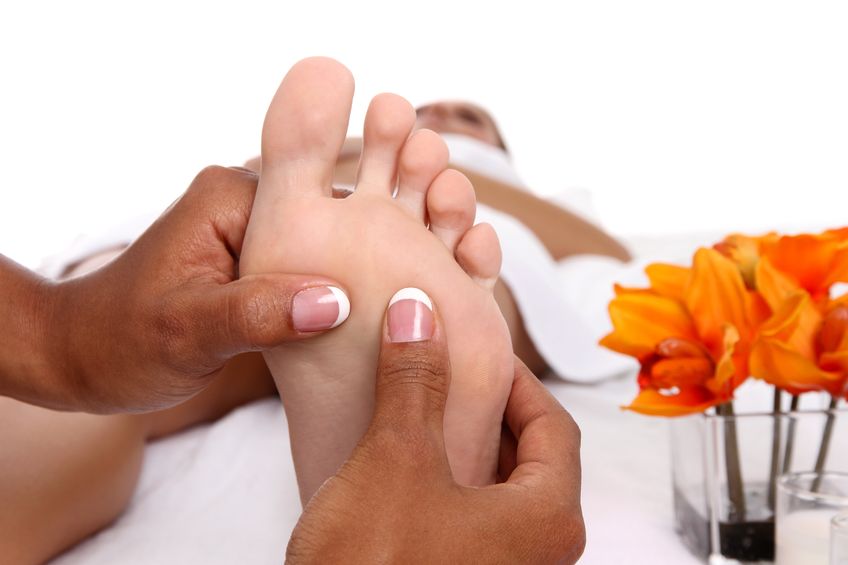

Normally you do not think about your feet, but in this post we are going to think about our feet a bit. No, the title of this post is not a spelling mistake, it should have the word “foot” in as it is about thinking about your feet today, especially with regards to a therapeutic reflexology session.
- Interesting Foot Facts
Did you know that you are usually not ticklish when you touch your own feet, because your brain expects the touch and then your body responds differently (ICR, 2015:93). One of the questions patients tend to ask, is whether the reflexology session will be ticklish. The answer is easy: No, therapeutic reflexology uses pressure to stimulate reflexes and therefore the session will not be ticklish at all; so rest assured, you will not be tickled during a session, but will instead enjoy it tremendously.
The Institute for Creation Research (ICR) (2015:58) indicates that 25% of all the bones in your body are located in your feet. Think about that; a quarter of all the bones are in your feet. Fascinating to think how beneficial therapeutic reflexology can be for your feet.
The ICR (2015:58) further mentioned that you usually take 8000 to 10 000 steps per day and if you work it out, that means that you actually walk around the earth four times during your lifetime. How awesome is that? Your feet work very hard to carry you around and deserve to be treated regularly; therapeutic reflexology is the ideal way to repay your feet for the hard work they do for you.
- What is therapeutic reflexology?
Therapeutic Reflexology is a formally recognised healthcare modality in South Africa regulated by the Allied Health Professions Council of South Africa (AHCPSA) in accordance with the Allied Health Professions Act, 1982 (Act 63 of 1982). The therapeutic reflexologist stimulates reflex points or nerve endings on your feet (and sometimes other body parts if they are trained to do so) that corresponds to various bodily systems and organs with the purpose of stimulating the body’s own innate healing ability. This reflexology treatment is performed within a professional scope of practice issued by the AHPCSA.
Therapeutic reflexology is a holistic healthcare system that benefits the whole body and can be used for a dual purpose: Firstly, it can be used to treat illness conditions by helping the body to heal and/or balance itself, and secondly, it can be used as preventative healthcare system in order to prevent illness. As such, therapeutic reflexology is very beneficial for “stress and related disorders, emotional disorders, digestive problems, circulatory disorders, menstrual problems, insomnia, fatigue, and most chronic and acute illnesses” (Brown, 1999:49).
- What to expect during the first therapeutic reflexology session?
Each therapeutic reflexologist approaches their profession differently, but overall the first session consists of the therapist taking a comprehensive case history and a therapeutic reflexology assessment followed by a therapeutic reflexology treatment.
Therapeutic reflexology is a non-invasive healthcare modality and therefore you do not have to be nervous about it. You do not get undressed during the session and all you have to remove, is your shoes and socks. The therapeutic reflexologist will assess your feet; you do not have to be nervous about this either and please do not be embarrassed. What you may see on your feet as a possible awkwardness, may in actual fact give the therapeutic reflexologist a very good idea of your overall condition of health and possible underlying imbalances in the body. Yes, your feet are really a mirror of your overall health and wellness that the trained therapeutic reflexologist will assess in order to provide you with the best possible treatment plan customised to your unique situation and body.
Do not feel uncomfortable; the therapeutic reflexologist is a professional and works with feet daily and will never make you feel self-conscious or awkward during the session.
Each therapeutic reflexologist uses a unique approach as the modality is based on science, but its application is an art that is dependent on the individual therapist’s background, training and experience. There may be differences in approach between reflexologists, but overall the therapeutic reflexologist will not use any cream or lotion during the treatment while others may prefer to make use of things like powders and others use a combination of powders and lotions.
These art forms also continue in the fact of whether you will experience pain during the session or not. Some reflexologists believe that the treatment is not effective if you do not experience pain, however, I disagree with that approach. Personally, I believe that part of the reason why therapeutic reflexology is so effective in helping your body heal itself, is the fact that your body releases endorphins which only occurs if you enjoy the session and relaxes. I therefore do not believe that pain makes the session more effective, because if you are in fear during a session, it will inhibit the release of endorphins and instead make you dread the next reflex stimulation. My approach is thus to help you relax and enjoy the session while effectively stimulating the reflexes without causing you unnecessary pain. There may be areas on your feet that are sensitive, but as we shall be communicating during the session, it shall be dealt with in a way that does not lead to you having to fear being caused pain.
The duration of the first session may also vary, but it is usually 60 minutes to 90 minutes in duration.
- What number of sessions will be needed?
The number of sessions needed will vary depending on how your body reacts to the reflexology treatment and based on your health condition and the illness conditions you are dealing with.
“Some people require treatment two or three times in quick succession, slowing down to once a month or even less often” (Brown, 1999:49). It is difficult to tell you in advance how many sessions will be needed, but on average you may need between one and ten sessions to see a good response. I use the Vacuflex Concepts electronic device in combination with the manual reflexology sessions which seems to speed up the positive results, but we usually get a better indication after the first session. Once we know how your body reacts to the sessions, we can discuss how many sessions will be needed and in what succession.
During the past year I have seen a number of people who experienced positive results from the very first session while others had to wait for two to five sessions before experiencing the same results. It all depends on your unique body and circumstances.
“Many people continue to have treatment after the original problem is resolved, in order to keep the body balanced” (Brown, 1999:49). I have seen this on numerous occasions. Patients visited me due to a diagnosed illness condition that proved to be a challenge and we developed a treatment plan that sometimes included a couple of sessions in quick succession which reduced to once a week and later to once a month just to maintain balance and the positive effects.
The number of sessions can therefore vary quite considerably, but will usually not exceed ten, unless it is used for maintenance and preventative healthcare purposes.
Just keep in mind that your lifestyle may have caused or worsened your condition so imagine an incorrect lifestyle over the past two years caused you to experience some uncomfortable symptoms; please do not expect it to disappear after just one therapeutic reflexology treatment. A good rule of thumb is: If it took you two years to cause the symptoms with your lifestyle, then allow your body at least two years to rectify it as well.
- Therapeutic Foot Reflexology Thoughts
Foot reflexology is a non-invasive and very enjoyable healthcare modality that proved to be very effective with certain conditions and in alleviating various uncomfortable symptoms. It is an amazing modality that therapeutic reflexologists do not only believe in, but also enjoys doing.
Just thinking back of over the past few months, it is absolutely amazing to think that by stimulating the nerve endings on a person’s feet they are able to experience results like the alleviation of pain, improvement of neuropathy, reduced stress levels, reduction of insomnia, improved digestive function and even the elimination of infertility leading to various ladies falling pregnant after treatment, even those who cannot ovulate without treatment.
Therapeutic reflexology is a wonderful healthcare modality and it never ceases to amaze me, not only for the results so often seen, but also for the honour to be entrusted with your feet and your body.
Hope this post made you think a bit about this healthcare modality involving your feet!
References
Brown, E. (1999)Alternative Medicine: A step-by-step guide. Bath, UK: Mustard.
Institute for Creation Research (ICR). (2015) Guide to the Human Body. Eugene, OR: Harvest House.
—
Christo A. Scheepers: Therapeutic Reflexologist
Dip.T.R.(Cum Laude) [IARAMT]
AHPCSA: A11945
Pr. No.: 1080000737453
Tel. 072-800 7243