What is traumatological reflexology? This post will delve into these terms and attempt to bring it together based on my experience in dealing with trauma.
What is Traumatology?
Traumatology is actually a branch of medicine and can be seen as a sub-division of surgery where a medical doctor deals with wounds and injuries that occurred during a traumatic event like a car accident.
In a more psychological sense, traumatology can be seen as that part of psychotherapy dealing with injury to the mind due to a traumatic event that a person experienced like an assault.
Where does Traumatology fit into Reflexology?
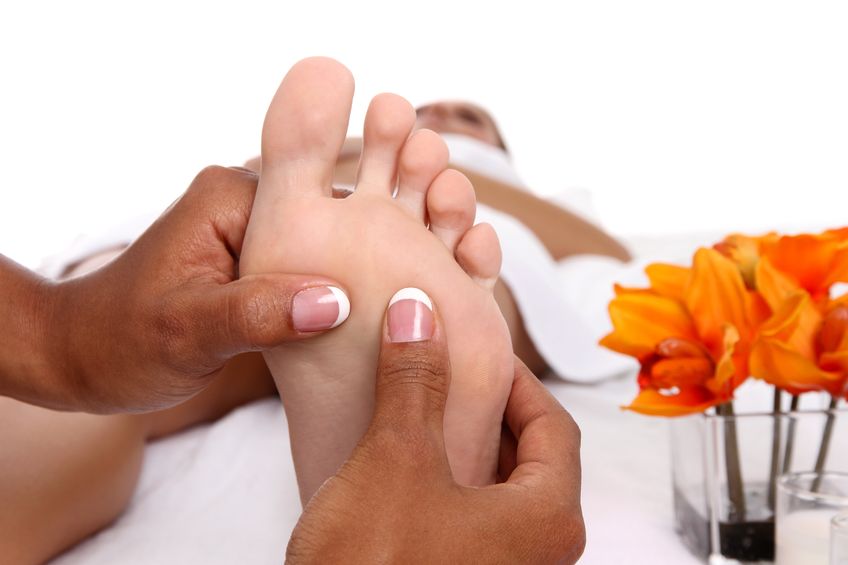
The plain answer is that it does not directly fit together, but therapeutic reflexology is a great complementary therapy to assist people that experienced a trauma in their lives.
Therapeutic Reflexology is a complementary healthcare modality formally regulated in South Africa by the Allied Health Professions Council of South Africa (AHPCSA) and as such these therapists work within an AHPCSA scope of practice for the profession.
The AHPCSA scope of practice makes it very clear what a therapeutic reflexologist may do and what may not be done so within these boundaries, therapeutic reflexology is offered to patients of various backgrounds.
I have been dealing with trauma patients since 1999 in the form of non-psychological counselling and since 2003 have been doing reflexology. In 2005 I had the opportunity to work in a Netcare hospital doing trauma debriefing with patients and incorporated reflexology as a modality in the treatment with great success. Today I have a therapeutic reflexology practice working with people from various backgrounds with many years of experience in working with trauma patients; both physical trauma and psychological trauma.
Do therapeutic reflexologists offer counselling?
No, therapeutic reflexologists are not counsellors and as such do not offer professional counselling, but during a session the patient and therapist do communicate and they talk to each other, but that is not on a professional counselling level. The therapeutic reflexologist will always remain within the scope of practice boundaries.
The task of the therapeutic reflexologist is to offer therapeutic reflexology, not counselling.
Having worked with trauma patients for many years, I have learned that it is imperative to know what you are doing, because trauma victims are fragile and a therapist or even a practitioner can easily do more harm than good if they are not specifically trained and experienced in dealing with trauma patients. Even very effective and skilled counsellors are not always good at working with trauma patients, although they are really successful in dealing with a wide range of people experiencing all kinds of other problems.
I have qualified and operated as trauma counsellor before incorporating reflexology in my practice, however, in 2018 I decided to practice mainly as a therapeutic reflexologist. Not to have my expertise as trauma counsellor go to waste, I still maintain my registration and the accompanying Continuous Professional Development (CPD) points as a Specialist Wellness Counsellor (Specialising in Trauma) with the Association of Supportive Counsellors and Holistic Practitioners (ASCHP), a South African Qualifications Authority (SAQA) professional body regulating non-psychological counsellors. I also do still counsel people that have experienced trauma, but that is done as a totally separate profession in a separate practice (www.christoscheepers.org) and it does not form part of the therapeutic reflexology treatment.
Where it does benefit me, though, is that when offering therapeutic reflexology to a trauma patient, I understand what the person is experiencing and it helps to understand the patient in a multi-disciplinary setting, because often such a patient will be receiving psychological counselling. It helps me to understand the counselling process the patient is receiving from the counsellor and as such the therapeutic reflexology sessions may be customised specifically for the patient and where he or she is in the treatment process.
Where can Therapeutic Reflexology help trauma patients?
When a person experiences a trauma, there are two chemical reactions occurring in the body. Firstly the body secretes cortisol (the stress hormone) and secondly adrenaline. This is to ready the body to either fight the threat or to run away from the threat.
Often after a traumatic event, exercise will be recommended for the trauma patient to work out the excess of these chemicals in the body. However, a trauma victim that has just experienced an assault or a sexual trauma like a rape, would not want to exercise and be amongst other people directly after the trauma due to dealing with many emotions including fear and anxiety.
Therapeutic Reflexology is a good modality to help the body to get rid of the excess of these chemicals in the body and along with that it will help the body to relax which may help the patient to actually sleep better, even after just experiencing a traumatic event.
What if I experienced trauma a long time ago, can therapeutic reflexology still help?
Yes, therapeutic reflexology can still help you to relax and assist the body to balance itself from the inside out. Remember that even though trauma is often a once-off event, it mostly have long term effects on the person and many people may experience Post-Traumatic Stress Disorder (PTSD) after the traumatic event.
To explain this: Imagine a lion walks into the room right now. You will be shocked and your body will release adrenaline and cortisol to help you ready your body to either have the strength to fight this lion or to have the ability to run away from the lion. This is good and your body should react like this, because it is saving your life. However, the problem comes in when this becomes a long-term and continuous incident. Your brain cannot distinguish between a physical threat like the lion that walked into the room or an emotional threat that is occurring only in your mind; like a lion of stress walking around in your mind. Your body still reacts in the same way and keeps your body in fight or flight mode.
You may not believe this, but just think about cutting a lemon in half, then you cut it in half again and you take one of those pieces and put it in your mouth and take a bite. What happens? Do you taste the sour lemon and even have your muscles in your face pull as if you really took a bite of that lemon? Well, that is a good example. Your brain does not distinguish between you eating a real lemon or your imagining eating the lemon, your body reacts in a similar way.
So, just think about the consequences of your body being in heightened stress state for an extended period of time. It is not difficult to imagine that you will feel stressed and struggle to sleep and sometimes struggle to concentrate or even become physically ill with signs and symptoms that doctors cannot find a physical reason for. This can be the result of a trauma you have experienced in your past, but never dealt with.
Therapeutic Reflexology is the ideal healthcare modality to help you to relax and get your body to relax regardless of what is going on in your mind. Once the body relaxes, your body has the ability to attempt to heal itself or at least balance itself from the inside out. In that way, therapeutic reflexology can be an excellent complementary modality that can assist trauma patients even though they are being treated in a multi-disciplinary team by a medical doctor, a psychologist or a number of other professionals.
Conclusion
Traumatological Reflexology is terminology I added together due to my work with trauma patients from both a counselling and reflexology background, but it refers in this instance more to how therapeutic reflexology can benefit trauma patients within the therapeutic reflexology scope of practice.
Therapeutic reflexology is one of the best healthcare modalities to assist trauma patients, whether you have just experienced the trauma or whether it has been a trauma you experienced a long time ago. It is also very effective in dealing with trauma without the trauma patient having to talk about the trauma at all!
References
Bremner, J.D. (2006) Traumatic stress: effects on the brain. Dialogues in Clinical Neuroscience, 8(4), pp. 445-461.
Scheepers, C.A. (2002) Trauma handling by using the metaphorical value of Bible characters within narrative context. Unpublished M.Min. Dissertation. Pretoria: Commonwealth Open University.
—
Christo A. Scheepers: Therapeutic Reflexologist
Dip.T.R.(Cum Laude) [IARAMT]
AHPCSA: A11945
Pr. No.: 1080000737453
Tel. 072-800 7243