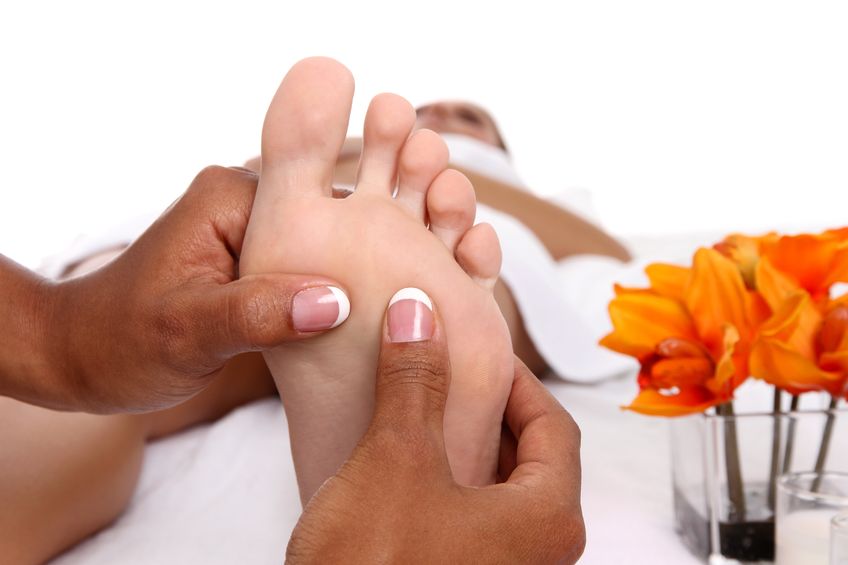
Therapeutic reflexology is a complementary healthcare modality that holistically treat the human body. In today’s post we’ll explore this holistic modality, especially in the social dimension, to understand where it can be used effectively.
Social Holism
Human beings are holistic in nature and consists of seven distinct dimensions, namely the physical, psychological (emotional), spiritual, sexual, social, financial and career dimensions (Scheepers, 2003; Scheepers, 2007). Therapeutic Reflexology is able to address all seven these dimensions and therefore it can be seen as a truly holistic healthcare modality.
Today our focus will be on the social dimension; that human dimension characterised by your interrelationships with other people. In the previous posts on the holistic dimension, we looked at the spiritual, psychological, physical and sexual dimensions which all have to do with you as a person and what is happening inside you. The social dimension is external and not internal as the previous four dimensions discussed.
You are an individual, but you are not living in isolation; you live within a social environment and you have interaction with many people and you also build relationships with people. These relationships are on various levels of intimacy and may be a casual encounter with a stranger to a long-term friendship to an intimate relationship with a specific person.
Socially, you are not living on your own, even though you may sometimes feel lonely or alone. You are constantly interacting with people around you and that is your social dimension of being a human being. Relationships are holistic in nature as you literally interact with people of all spheres of life and as such you are influenced by other people. There are psychological and sociological theories believing that people are not individuals living in isolation, but that your personality and your whole being are socially constructed.
This puts a responsibility on you as a person; the people you choose to interact with and socialise with, will have an influence on who you become as a person. Let’s consider a practical example: You woke up and you feel very good about the day, but then you visit your friend that is a pessimist and only sees the negative in everything. After spending an hour with this person in which your pessimistic friend told you how bad South Africa is and how bad the political situation is and how bad the crime is and how bad life in general is, what happens? You usually feel very despondent and even depressed yourself! That is the influence of social interaction with other people.
Just consider the opposite. You may be that very person being pessimistic about life and you may actually cause other people to feel negative about the country or the political situation or the crime levels and so on. It may be time to reconsider whether this outlook on life is working for your or not? It may be time to change your outlook on life, but with so many negative things happening in society, how can you do this?
Have you ever consider therapeutic reflexology as a means to deal with your social interactions?
Social Benefits
Therapeutic reflexology is not a sociological or counselling approach in dealing with your outlook on life or dealing with your social interactions, but it is a complementary healthcare modality that has the ability to add value to your life and your relationships.
Sometimes you just need to take some time out and relax and feel rejuvenated in order to have a more positive outlook on life; therapeutic reflexology is the ideal modality to help with just that.
Have you ever considered booking a therapeutic reflexology session for both you and your spouse or for you and your sister or for you and your best friend? Getting reflexology with a spouse, sibling or friend is often not only a very relaxing experience for both of you, but it is often an ideal time to spend together while experiencing relaxation and rejuvenation together and this is regularly a wonderful way to mend broken relationships or to just renew your relationship in an environment of wellness and wellbeing.
Getting a therapeutic reflexology session when you feel vulnerable or lonely, is a good and safe way to interact with a professional therapeutic reflexologist while experiencing the relaxing feeling of overall wellbeing along with some healthy conversation. This may reduce the loneliness and make you feel connected with another human being.
When you feel mad at your spouse or furious at a friend, it is often beneficial to get a therapeutic reflexology session for yourself and give yourself the time-out to just rethink your relationship and it is possible that you walk out of the therapy session with a clear mind and a new perspective on how to deal with relationship matters.
Socially we live in a very diverse society with people from all walks of life and when a diverse group of people have to interact with each other, it is not uncommon for conflict to arise. Dealing with conflict is something each one approaches differently, but an approach to consider, is to not get involved in direct arguing, but to take some time out and to clarify things in your mind when you feel calm instead of making decisions when you are emotional. Calming your mind, happens very effectively during a therapeutic reflexology session and it is definitely something to consider when you have to deal with daily conflict.
Therapeutic reflexology is very effective in helping you relax, reduce your stress levels, calm your mind and then dealing with interpersonal matters; therapeutic reflexology can even be seen as a social therapy as it can be done socially in that you may bring your spouse, sibling, child or a friend along and you may experience it together.
References
Scheepers, C.A. (2003) The Exploitation of Practical Sociology as Counselling Model for Application in a Christian-Holistic Founded Practice. Unpublished Ph.D.-thesis. Kempton Park: Commonwealth Open University.
Scheepers, C.A. (2007) Holistic Wellness: A Christian Omnibus for Whole-Person Wellbeing. Lincoln, NE: iUniverse.
—
Christo A. Scheepers: Therapeutic Reflexologist
Dip.T.R.(Cum Laude) [IARAMT]
AHPCSA: A11945
Pr. No.: 1080000737453
Tel. 072-800 7243