
In today’s post, we are considering a lesser-known cause of pelvic pain, namely Adenomyosis. We’ll explore what adenomyosis is, how it affects women’s health, and how complementary therapies may support overall wellbeing.
- Introduction
While many women have heard of endometriosis, another condition affecting the uterus often receives far less attention: adenomyosis. Yet for many women between the ages of 30 and 50, adenomyosis may be a hidden cause of heavy periods, pelvic discomfort, and persistent fatigue.
- Defining Adenomyosis
Adenomyosis is a gynaecological condition that occurs when endometrial tissue (the lining of the uterus) grows into the muscular wall of the uterus (myometrium).
Normally, the endometrium lines the inside of the uterus and sheds during menstruation. In adenomyosis, however, this tissue becomes embedded within the uterine muscle and as hormonal changes occur during the menstrual cycle, this tissue thickens, breaks down, and bleeds, but because it is trapped within the uterine muscle, it can cause inflammation, swelling, and significant pain.
The cause of Adenomyosis is not fully known (Mayo Clinic, 2025), but the risk factors may include age, childbirth, and previous surgeries (Chernofsky, 2026).
- Symptoms of Adenomyosis
Adenomyosis may vary from mild to severe, and some women may experience no symptoms at all.
However, common symptoms may include:
- An enlarged uterus;
- Heavy or prolonged menstrual bleeding;
- Severe menstrual cramps;
- Chronic pelvic pain;
- Painful sexual intercourse;
- Abdominal pressure or bloating; and
- Fatigue related to heavy menstrual bleeding.
Many women simply assume these symptoms are part of “normal” menstruation and may not realise that an underlying condition could be present.
- Diagnosing Adenomyosis
Diagnosing adenomyosis can sometimes be challenging because symptoms often overlap with other conditions such as fibroids or endometriosis.
Medical practitioners may use several diagnostic tools, including:
- Medical history evaluation;
- Pelvic examinations;
- Ultrasound imaging; and
- MRI scans.
In the past, adenomyosis was often only confirmed after hysterectomy, but modern imaging techniques now allow doctors to identify the condition more accurately while preserving fertility options where possible.
Therapeutic Reflexologists are not diagnostic practitioners and therefore the diagnosing of Adenomyosis falls outside their scope of practice because they are not allowed to diagnose. For a diagnosis, a Medical Doctor like a Gynaecologist must be consulted.
- Treatment Approaches
Treatment for adenomyosis depends on several factors, including symptom severity, age, and reproductive goals.
Medical approaches may include:
- Hormonal therapy;
- Anti-inflammatory medication;
- Intrauterine devices (IUDs) for hormonal management; and
- Surgical options in severe cases.
Alongside medical care, many women also look for complementary therapies to support stress management, relaxation, and hormonal wellbeing. This is where Therapeutic Reflexology can provide valuable support, because as a registered therapist, the Therapeutic Reflexologist may provide treatment for already diagnosed conditions, although treatment is never aimed to treat a specific condition, but instead to support the body’s own innate healing ability, systems and processes.
- Therapeutic Reflexology as Complementary Support
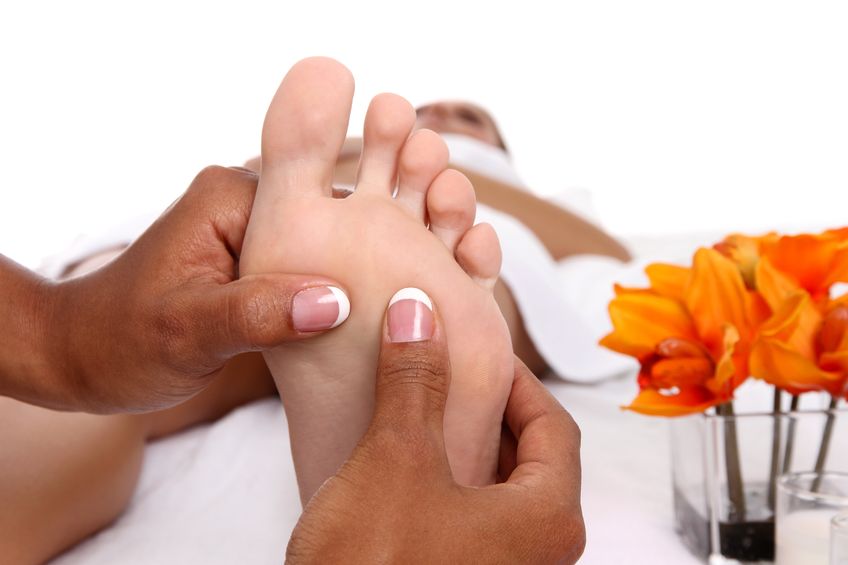
Therapeutic Reflexology works by stimulating specific reflex points (nerve endings) on the feet that correspond with different organs and systems in the body.
This gentle and non-invasive approach aims to:
- Support the nervous system;
- Encourage deep relaxation;
- Improve circulation; and
- Support the body’s natural regulatory processes.
For women managing conditions such as adenomyosis, Therapeutic Reflexology treatment sessions may help create a restorative environment where the body can shift from a stress-driven state toward a more balanced and restorative state.
Although Therapeutic Reflexology does not replace medical care, many women find that incorporating regular sessions into their wellness routine supports stress management, emotional balance, improved overall wellbeing, and often reduced pain levels.
It is imperative to use a properly qualified Therapeutic Reflexologist and in South Africa those therapists are registered with and formally regulated by a statutory council, namely the Allied Health Professions Council of South Africa (AHPCSA). Just like your Medical Doctor must be registered with a statutory council, the HPCSA, similarly, your Therapeutic Reflexologist should be registered with the AHPCSA. Always use a properly qualified, experienced and AHPCSA Therapeutic Reflexologist. Your body deserves the best!
- Supporting Women through Holistic Care
Modern women often carry a significant physical and mental load, for example, balancing careers, family responsibilities, and personal wellbeing.
Conditions such as adenomyosis may make this balance even more challenging.
Complementary therapies that promote deep relaxation and nervous system recovery can play a valuable role in supporting women as they navigate these health challenges.
- Conclusion
Adenomyosis may be less widely discussed than endometriosis, but it can have a significant impact on women’s quality of life.
Increasing awareness helps women recognise that severe menstrual symptoms should never simply be accepted as normal. If you are experiencing persistent pelvic pain, heavy periods, or ongoing fatigue, it may be beneficial to consult a healthcare professional and explore supportive wellness approaches that complement your treatment plan. Therapeutic Reflexology is the ideal therapy to include in your healthcare regime, because Therapeutic Reflexologists are formally regulated by the AHPCSA, they are part of the multidisciplinary healthcare team that may support you.
Therapeutic Reflexology offers a gentle, professional, and non-invasive approach that many women find beneficial as part of a holistic wellbeing strategy.
Sometimes, taking one small step toward self-care can make a meaningful difference in how you experience your health and daily life. Take such a step and make your Therapeutic Reflexology appointment today.
References
Chernofsky, M.R. (2026) Adenomyosis. [Online] Available at: https://www.hopkinsmedicine.org/health/conditions-and-diseases/adenomyosis#:~:text=Adenomyosis%20is%20a%20gynecologic%20condition%20that%20causes,*%20Physical%20exam%20*%20Ultrasound%20*%20MRI[Accessed 24 March 2026].
Mayo Clinic. (2025) Adenomyosis. [Online] Available at: https://www.mayoclinic.org/diseases-conditions/adenomyosis/symptoms-causes/syc-20369138 [Accessed 24 March 2026].
OpenAI. (2026). ChatGPT (GPT-5.3) [Large language model]. Available at: https://chat.openai.com [Accessed: 10 March 2026].
—
Christo A. Scheepers: Therapeutic Reflexologist
DTR (Cum Laude), PhD, FCMA
AHPCSA: A11945
Pr. No.: 0737453
Tel. 072-800 7243