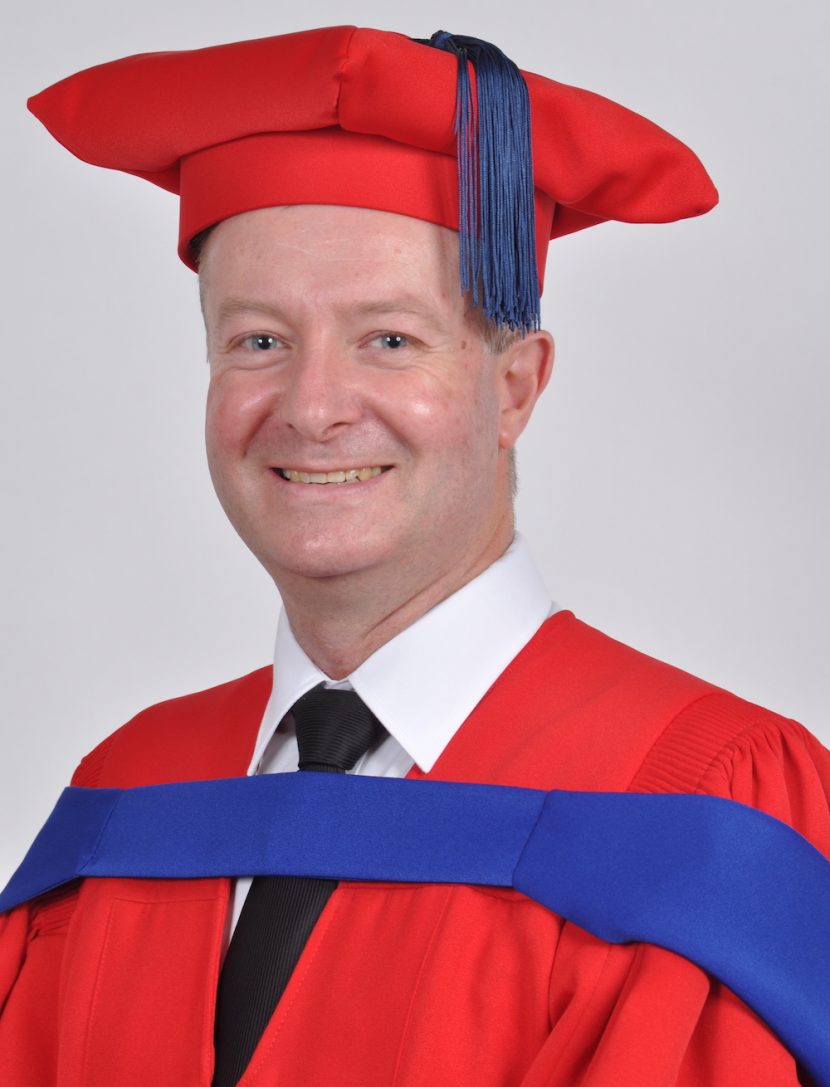
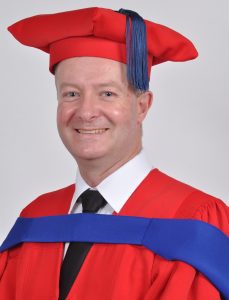
I graduated with a Doctor of Philosophy (Ph.D.) degree; today we are contemplating the journey.
When enrolling for the Ph.D. degree in October 2015, I never thought it would become an almost 7-year journey of discovery and restoration, but that is exactly what happened. To fully understand, let’s go back to February 2004 when I graduated with my first Ph.D. degree. The following table provides a comparative overview.
Table 1: Ph.D. Comparative Overview
| Description |
First Doctorate |
Second Doctorate |
| Qualification |
PhD |
PhD |
| Qualification Focus |
Interdisciplinary Studies |
Management of Technology and Innovation |
| University |
Commonwealth Open University, British Virgin Islands, UK |
The Da Vinci Institute for Technology Management (Pty) Ltd, Johannesburg |
| SAQA-Accreditation |
Not SAQA-Accredited |
SAQA-Accredited on NQF Level 10 |
| Date of Enrolment |
2002 |
2015 |
| Date of Graduation |
2 February 2004 |
23 May 2022 |
| Promoter |
Prof. Marius D. Herholdt |
Prof. Marius D. Herholdt |
| Thesis Title |
The exploitation of practical sociology as counselling model for application in a Christian-Holistic founded practice |
Creating an entrepreneurship framework to stimulate employment creation in the South Africa Healthcare Industry |
 |
 |
|
| Simultaneous Additional Qualification |
Diploma in Reflexology (Cum Laude) Institution: Aesthetic + Cosmetic Trainer: Hans Gerspacher Completed: 15 June 2003 SAQA: Not SAQA-Accredited Industry: Health & Beauty |
Diploma in Therapeutic Reflexology (Cum Laude) Institution: IARAMT Trainer: Inge Dougans Completed: 20 January 2018 SAQA: SAQA-Accredited on NQF Level 6 Industry: Allied Healthcare, formally regulated by the Allied Health Professions Council of South Africa (AHPCSA) |
Table 1 provides an overview of the double-doctorate journey.
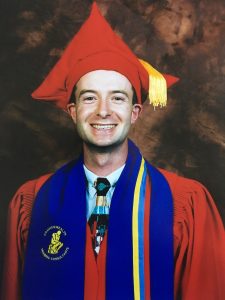
I enrolled for the Ph.D. in Interdisciplinary Studies at Commonwealth Open University in 2002, and with Prof. Marius Herholdt as my promoter, embarked on the journey of delving into the disciplines of alternative-and complementary medicine (CAM), business management, counselling, psychology, and sociology to develop a holistic counselling model. It was a valuable journey that resulted in a patient care model that I have been using until this day. During my studies, I began to learn more about CAM and my interest in reflexology lead to wanting to learn more about the modality to understand the content for the Ph.D. journey better. I thus enrolled for the Diploma in Reflexology with Aesthetic + Cosmetic and begin to include reflexology in my client treatments. I graduated in 2004 with a Ph.D., but unfortunately, the qualification was never accepted by the South African Qualification Authority (SAQA), which meant that the qualification had limited functionality within the South African context as it did not provide any scope for work opportunities.
Years later I was working in administration and management within the CAM industry when the opportunity arose to enroll for a Ph.D. in Business Managerial Leadership and in October 2015 the big step was taken. The doctoral journey began, this time on a SAQA-accredited qualification that was recognised on the National Qualifications Framework (NQF) Level 10, which is the highest level for a qualification. I had the privilege of working with Prof. Marius Herholdt as promoter again. During the Ph.D. journey, I also enrolled with the International Academy of Reflexology and Meridian Therapy (IARAMT) to complete a Diploma in Therapeutic Reflexology to be formally registered in the profession and to obtain a practice number that made medical aid reimbursements possible. Apart from loving reflexology as healthcare therapy, it also offered the opportunity to set up a private practice and to practically implement the knowledge gained and generated during the PhD journey, on a practical level, especially within the boundaries of practice management in the Allied Healthcare Sector in South Africa.
When looking at the comparative overview, it is evident that the latter doctoral journey mirrored the former doctorate, but this time around it was with appropriate SAQA-accreditation in place to ensure the formal recognition of the Ph.D. and the Therapeutic Reflexology qualifications.
The Ph.D. journey has been a long but extremely satisfying journey of discovery and restoration. It was seen as restorative because of the qualifications being formally recognised leading to the establishment of a Therapeutic Reflexology private practice with a valid practice number, but also the ability to officially teach within higher educational facilities with an acceptable qualification. During the Ph.D. graduation on 23 May 2022, two important statements were made: (1) The Ph.D. can be seen as a license to teach; and (2) The Ph.D. is not for you, it is a gift to the world. These statements culminated in exactly what the purpose was of enrolling in the second Ph.D., to be able to teach at higher education level and to make a difference in the world. When thinking about it, it is a humbling thought to consider the fact that I have created new knowledge that has not existed before but now it is my responsibility to expand it and practically apply it to make the world a better place for everyone. What a privilege and honour to now embark on a new journey, a journey of impacting the world in a positive way.
The Ph.D. journey has been a voyage of discovery. It was about discovering who I am as a person, as a researcher, and as a lecturer. It became evident that I am a pragmatic person that always look for the best approach that works in the specific context, and if something is not working, it is changed to something that does work. Knowing who I am, provides clear direction for the future.
The past 7 years have been an interesting journey of growth and something I’ll always remember, is that during the COVID-19 pandemic national lockdown, everyone stayed at home and was having a vacation, while I was sitting with the laptop typing away at the thesis. The jokes around it also continued because whenever my wife wanted to do something, the joking answer has always been: “After the thesis.” Now, we are “after the thesis”.
The journey has been wonderful, and I developed as a person to the point of being confident in my areas of expertise. Thinking back over the seven Ph.D. years, a few aspects stand out, for example:
- Having to leave full-time employment and entering the world of freelance work
- Starting up and growing a Therapeutic Reflexology private practice
- Practically implementing what I learned during the Ph.D. data collection process in my private practice
- Typing the thesis during the COVID-19 pandemic national lockdown
- Sitting in coffee shops researching and typing a thesis while my family did the shopping
- Getting the opportunity to lecture at a private university even before the graduation
- Continuing to supervise master’s degree students at a different private university.
One of the valuable aspects of the Ph.D. journey was the opportunity I had to interview various Therapeutic Reflexologists and other healthcare providers in their private practices; being invited into their spaces has been appreciated. What will always be remembered, is how interaction with colleagues led to building up a network and becoming part of a multidisciplinary healthcare team, making referrals to the correct person possible.
There are so many people to thank for the Ph.D. journey; I appreciate each one of them that contributed to the conclusion of this qualification.
This post is not specifically about Therapeutic Reflexology, but it is part of my journey in developing into the Therapeutic Reflexologist that I am today.
Make your Therapeutic Reflexology appointment today!
—
Christo A. Scheepers, PhD
Therapeutic Reflexologist
AHPCSA: A11945
Pr. No.: 1080000737453
Tel. 072-800 7243