
Read more about foot fetish and Therapeutic Reflexology in today’s post.
Today in class, we looked at a real-life case study about Lisa Mukhiya* who started a reflexology centre in Nepal that grew into three different centres; the name of the reflexology centre, was Foot Fetish. It was a great success but the question that had to be answered in class is whether the name was seen as an appropriate business name for a reflexology centre, and whether that would be appropriate within the South African context.
Let me make it clear from the beginning, that in South Africa, the name would not be appropriate for a Therapeutic Reflexology practice, because Therapeutic Reflexologists are formally regulated by a statutory council, namely the Allied Health Professions Council of South Africa (AHPCSA) that does not allow just any name to be used for a practice. According to the AHPCSA regulations, the name of the Therapeutic Reflexology practice should usually be the name of the therapist followed by the description of the profession, thus in my case, the practice is called Christo Scheepers Therapeutic Reflexologist. There are a few variations allowed, for example where partnerships between different Therapeutic Reflexologists are formed, but mostly, the name of the practice is limited accordingly. The benefit of limiting the practice name is that it ensures uniformity and professionality among the regulated professions. It also eliminates the connotations that may be associated with certain names, like in the case study above.
With that being said, the connotation associated with the terminology foot fetish has brought up the fact that there may be a sexual association with the term and people may look at Therapeutic Reflexologists as therapists having foot fetishes. The first step is to determine exactly what a foot fetish is. The general definition is when feet and/or associated things like legs, shoes, socks etcetera result in the sexual arousal of a person. Overall, it can be said that a fascination with an item or body part has no harm because sexually people tend to like different things, some may like feet, others may like hands, some may like eyes, and so forth. The challenge with a fetish is therefore not the fascination with the item or body part but rather the infatuation with it; when a person is unable to become sexually aroused without the item or body part, then some consideration should be paid to possibly deal with it.
Bringing this all back to Therapeutic Reflexologists; as a Therapeutic Reflexologist I’m obviously fascinated with feet because that is my therapeutic domain within which I work, just like your GP is fascinated with your body, or your ENT specialist is fascinated with your ears, nose, and throat, or your Gynae is fascinated about your female organs, or your Urologist is fascinated with your male organs or urinary organs, or your Ophthalmologist is fascinated with your eyes. Fascination, or professional interest, does not mean fetish. There is nothing sexual about a healthcare professional being fascinated and constantly learning about the body or a specific body part if you are specialising in a specific field of healthcare. That is just part of what effective healthcare professionals do.
So, when people make a comment like Therapeutic Reflexologists are just people with a foot fetish, I am always tempted to respond with something like, “when you say that I’m just glad I’m not a Gynaecologist or the fetish might have to be a different body part”. When putting it in perspective, it is evident how ridiculous the general comment from the misinformed is.
As a Therapeutic Reflexologist, I love to help people, or put it differently, I love to empower people by providing them with effective therapy and in the process helping them to take responsibility for their own health while they experience a therapy that is available to them. Therapeutic Reflexology is known for assisting with infertility, pain relief, circulation improvement, helping with restoring balance (homeostasis), but mainly as one of the best stress-relieving techniques available within the field of healthcare and wellness.
Therapeutic Reflexology is a formally recognised healthcare profession in South Africa and as a Therapeutic Reflexologist, I have a valid practice number obtained from the same place where your medical doctors obtain practice numbers, making medical aid reimbursement possible. With that said, do you really think that your medical aid is going to pay for a foot fetish treatment? Of course not, your medical aid pays for acceptable healthcare services only, and Therapeutic Reflexology is recognised as such. It is therefore very important to ensure that you only make use of the services of a properly qualified and AHPCSA registered Therapeutic Reflexologist. Do not waste your time and money by going to somebody practicing illegally; in South Africa, AHPCSA registration is a legal requirement to practice the profession of Therapeutic Reflexology.
The Therapeutic Reflexologist is a healthcare professional and sees working on your feet (and other body parts) as a huge honour and privilege that is not taken lightly; being allowed to provide you with a touch therapy is something highly valued by professionals and it will always be valued as a safe space is created for you within which you are able to receive a healthy form of a professional touch. Your boundaries will always be respected and never overstepped.
As a patient, maybe you have a foot fetish, and you may love having your feet touched or massaged. Therapeutic Reflexology is the ideal therapy for you because it is often said that the type of touch received during a Therapeutic Reflexology session is like no other form of touch ever received. It makes people feel like they have been touched, but in a healthy way that increased therapeutic wellbeing. Whether you have a foot fetish or not, you are welcome to make use of Therapeutic Reflexology and experience the ultimate form of relaxation for yourself.
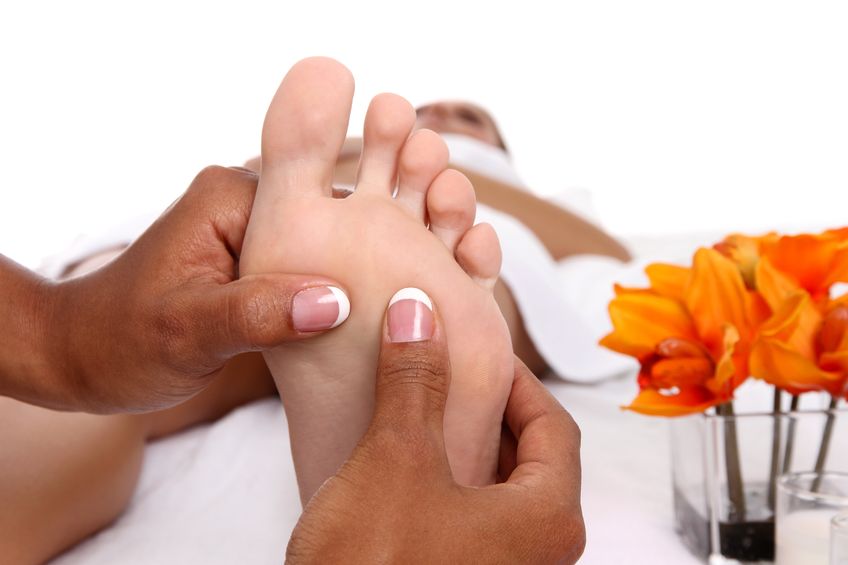
Maybe you are hesitant to receive a Therapeutic Reflexology session due to having ticklish feet or due to being self-conscious about your feet. Firstly, let me put you at ease; Therapeutic Reflexology makes use of finger pressure and therefore it is not ticklish at all. Secondly, you do not have to be self-conscious about your feet. The Therapeutic Reflexologist works with all kinds and types of feet and providing therapy on your feet will only be a privilege.
However, do not take my word for it; make your Therapeutic Reflexology appointment today and experience it for yourself!
References
Journal Articles:
Doxier, C.L., Iwata, B.A. & Worsdell, A.S. (2011) Assessment and treatment of foot-shoe fetish displayed by a man with autism. Journal of Applied Behavior Analysis, 44(1), pp. 133-137. [Online] Available from: https://www.ncbi.nlm.nih.gov/pmc/articles/PMC3050478/pdf/jaba-44-01-133.pdf [Acessed 27 June 2022].
Kafka, M.P. (2009) The DSM diagnostic criteria for fetishism. Belmont, MA: American Psychiatric Association. [Online] Available from: https://doi.org/ 10.1007/s10508-009-9558-7 [Accessed 27 June 2022].
Nagler, S.H. (1957) Fetishism: A review and a case study. The Psychiatric Quarterly, 31, pp. 713-741. [Online] Available from: https://doi.org/10.1007/BF01568763 [Accessed 27 June 2022].
Weinberg, M.S., Williams, C.J. & Calhan, C. (1995) “if the shoe fits…”: Exploring male homosexual foot fetishism. The Journal of Sex Research, 32(1), pp. 17-27. [Online] Available from: https://www.jstor.org/stable/3813093 [Accessed 27 June 2022].
Zarei, M. & Bidaki, R. (2013) Female foot fetishism disorder in childhood. Journal of Research in Medical Sciences. [Online] Available from: https://iranjournals.nlai.ir/bitstream/handle/123456789/721644/5E3879B0B7DB94860B799CAE1C52046C.pdf?sequence=-1 [Accessed 27 June 2022].
Internet Sources:
* https://yourstory.com/2009/11/lisa-mukhiya-founder-foot-fetish-and-itta/amp
https://www.healthline.com/health/foot-fetish#definition
—
Christo A. Scheepers, Ph.D.
Therapeutic Reflexologist
AHPCSA: A11945
Pr. No.: 1080000737453
Tel. 072-800 7243