Therapeutic reflexology is a complementary healthcare modality that holistically treat the human body. In today’s post we’ll explore this holistic modality, especially in the sexual dimension, to understand where it can be used effectively.
Sexual Holism
Human beings are holistic in nature and consists of seven distinct dimensions, namely the physical, psychological (emotional), spiritual, sexual, social, financial and career dimensions (Scheepers, 2003; Scheepers, 2007). Therapeutic Reflexology is able to address all seven these dimensions and therefore it can be seen as a truly holistic healthcare modality.
Today our focus will be on the sexual dimension; that human dimension characterised by your sexuality which may touch the previous three dimensions already discussed as well, namely the body, soul and spirit. Your sexual organs form part of your body, thus linking your sexual dimension with your physical dimension. Feelings and perceptions about sexuality are part of your mind and emotion processes, thus linking your sexuality with your psychological dimension. Your morality, values and choices about if and when to engage in sexual activity and what type of sexual activity to engage in, forms part of your spirituality, thus linking your sexual dimension with your spiritual dimension.
Often people feel insecure talking about or even thinking about their own sexuality due to past experiences or how they were brought up. Your sexuality is nothing to be ashamed of; it is part of the holistic being you have been created to be. Instead of ignoring your sexuality, it should be embraced in a healthy way or else you will never feel like a whole person.
Sexuality can be discussed in different aspects, so let’s have a look at a few of these aspects that directly affects your sexuality and shape your perception of your own sexuality:
* Gender
The first and most obvious aspect of your sexuality, is your gender. Usually children are born as male (when they have male sexual organs) or female (when they have female sexual organs). Formerly, this would determine how children were raised and how they would spend the rest of their lives, whom they would marry and sometimes even what careers they would enter. Today, things are a bit different in modern-day society and your gender does not necessarily direct your life and future decisions.
Hermaphrodite refers to children born with both male and female sexual organs and parents are usually left with the decision on how to surgically correct it and whether the child will become male or female. This is a difficult decision and is not uncommon that later in life the child grew up and as a teenager or as an adult realise that they would rather be the other gender.
In contemporary society gender is not indefinite and it can be changed, in which instance people fall under the broad category of being transgender with many sub-categories. Transgender does not only refer to people that do not relate to the gender they are, but also to people considering and undergoing gender reassignment surgery where their sexual organs are sexually changed and they become a person of the opposite gender.
* Sexual Orientation
Sexual orientation refers to your sexual preference or your sexual attraction; in other words, who you are sexually attracted to. Heterosexuals are sexually attracted to people of the opposite sex. Homosexuals are sexually attracted to people of the same sex and usually refers to males being sexually attracted to each other while lesbians are females being sexually attracted to each other. Bisexuals are sexually attracted to both members of the opposite sex as well as members of the same sex.
* Sexual Behaviour
People behave differently with regards to sexuality. Some people see sex purely as a physical act while others attach emotional value to it and yet others attach spiritual value to it. Your view on sex is often linked to your value system or your moral compass that are often linked to your spirituality and what your views on spirituality and/or religion involves.
* Libido
People have sexual desires (libido), but it varies from person to person and even from time to time. Sometimes people have a high sexual desire while others times it is lower. This varies due to various situations; sometimes it is due to medicine, sometimes it is due to fatigue, sometimes it is due to your mind being occupied with all kinds of other responsibilities. Libido is part of your sexuality and how you handle it, will make you think about and feel about your sexuality in a certain way.
It often affects your sexuality directly when you are in a sexual relationship and your libido and that of your partner is not at the same levels where the one has a high libido and the other one has a low libido; in times like these you need to realise that your sexual desire and your self-image is not the same and if your partner requires more or less sex than you, it is not a reflection on their love for you, their desire for you or ultimately who you are as a person.
* Sexual Performance
Many people attach their self-worth to their sexual performance and if they cannot perform sexually due to any of many reasons, they feel that their self-image is negatively affected. In contemporary society where sex is openly portrayed in the media, we are living in a culture where sexual performance is seen as an indication of how successful you are, but often this specific mindset is causing frustration when sexual performance is negatively affected due to the use of medication or due to medical conditions.
* Procreation
Becoming pregnant, forms a big part of your sexuality. When teenagers engage in sexually active behaviour, their focus is often on preventing pregnancy. They may use birth control, but often forget to use it as indicated or things go wrong and then they live in fear that they may have fallen pregnant and then have to deal with the consequences.
On the other hand, when people want to become pregnant, but due to many factors are struggling to fall pregnant and then have to deal with infertility matters, can also cause sexual related stress and all of this influences a person’s sexuality.
* Sexually Transmitted Diseases
Sexually Transmitted Diseases (STDs) like HIV/AIDS, Syphilis, Gonorrhoea, Genital Warts and so forth are things people in modern-day society have to deal with and therefore becoming sexually involved with a person should be more than merely an act with a stranger or it may end up to affect your sexuality in that you have to deal with these conditions.
* Sexual Trauma
Sexual trauma affects a person’s sexuality directly. People that were raped, sexually assaulted, sexually molested or sexually victimised, often have to deal with many feelings, fears and confusing emotions that directly affect how they see themselves sexually, but also how they would react towards sex and sexuality.
* Sexual Mindset
People’s sexual mindsets give an indication of how they view sex and sexuality. How you were raised, your spiritual background and beliefs, your sexual experiences, sexual trauma you have experienced and your sexual views all play a part in determining your sexuality.
Sex and sexuality is a fascinating subject and if you want to read more about the sexual dimension, you may read a book I wrote with a co-author entitled Between the Covers and is available here.

Sexual Benefits
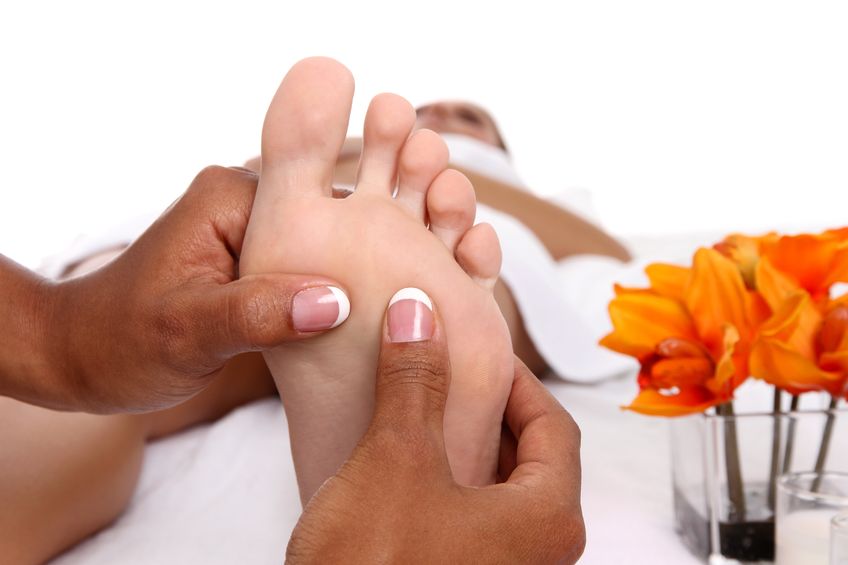
Therapeutic reflexology is not a sexual form of treatment, it is a scientific healthcare modality and therefore it is a non-invasive therapy that does not work directly on any sexual parts of your body, but it is the stimulation of nerve endings (reflexes) on your feet and sometimes other body parts like the hands, face and ears. Therapeutic reflexology treatment is non-invasive and therefore you do not have to get undressed for a therapeutic reflexology session and will never feel exposed or uncomfortable.
Therapeutic reflexology does offer benefits for your sexual dimension. Therapeutic reflexology is known for the benefits it offers to people experiencing infertility and many can testify of adding therapeutic reflexology to their treatment regime and then falling pregnant. I have personally worked with four women thus far that struggled with infertility (and sometimes could not even ovulate without medical assistance) that have fallen pregnant by just adding therapeutic reflexology to their lives.
Therapeutic reflexology helps the body to relax, to destress and to release endorphins in the body in an attempt to help the body balance itself; it helps the body to increase circulation, excrete toxins, balance hormones and merely help the body to cleanse itself in order to reach homeostasis (balance). The results of the body relaxing and balancing itself, is that it has the potential to assist with matters of the sexual dimension like balancing out libido, assisting with male sexual matters like impotence or female matters like painful intercourse; therapeutic reflexology is known for pain relief and increased circulation.
There are many benefits of therapeutic reflexology, but it is all done via stimulation of the reflexes in a non-invasive treatment of the feet, hands, face or ears that is not a sexual treatment in itself, but offers the body the chance to balance itself and the outcome of that may be overall improved sexuality to enhance wellness in all areas of life, including the sexual dimension.
A qualified and registered Therapeutic Reflexologist works with any person regardless of gender, sexual orientation or sexual preference and will do so without making you feel uncomfortable; instead a professional, safe and non-judgemental environment is provided where you can fully relax, be yourself and feel the stress disappear from your body in order for you to experience holistic wellness.
References
Scheepers, C.A. (2003) The Exploitation of Practical Sociology as Counselling Model for Application in a Christian-Holistic Founded Practice. Unpublished Ph.D.-thesis. Kempton Park: Commonwealth Open University.
Scheepers, C.A. (2007) Holistic Wellness: A Christian Omnibus for Whole-Person Wellbeing. Lincoln, NE: iUniverse.
—
Christo A. Scheepers: Therapeutic Reflexologist
Dip.T.R.(Cum Laude) [IARAMT]
AHPCSA: A11945
Pr. No.: 1080000737453
Tel. 072-800 7243