Is therapeutic reflexology a real healthcare modality or is it just airy-fairy foolishness? In today’s post, we’ll consider the notion that reflexology is sometimes seen as airy-fairy instead of real healthcare by some while debunking the truth behind these thoughts.
Let’s begin by mentioning that Therapeutic Reflexology is a recognised healthcare modality in South Africa, formally regulated by a statutory council namely the Allied Health Professions Council of South Africa (AHPCSA). Therapeutic Reflexologists registered with the AHPCSA may apply for practice numbers from the same institution where medical doctors obtain their practice numbers from in order to make medical aid reimbursements possible (dependent on the patients’ medical scheme plan and benefits). That in itself should already answer the question of whether therapeutic reflexology is airy-fairy foolishness or not because medical institutions will not furnish practice numbers to airy-fairy professions.
Taking it a step further, the AHPCSA formally regulates the profession of Therapeutic Reflexology based on official legislation in the country, namely the Allied Health Professions Act (Act No. 63 of 1982). When legislation becomes involved, it should provide some peace of mind that the professions are more than airy-fairy irrationality as the South African Government thought it well to legislate the practicing of such profession in the country.
Yes, you may say, that is all fair and well, but just because legislation is involved, just because the profession is professionally regulated and just because practice numbers are issued, does not make the profession less airy-fairy.
Really? If that is your point of view, you may be very hard to convince otherwise and it may be a frivolous exercise, but let’s look at some other arguments that have nothing to do with professional and official regulation.
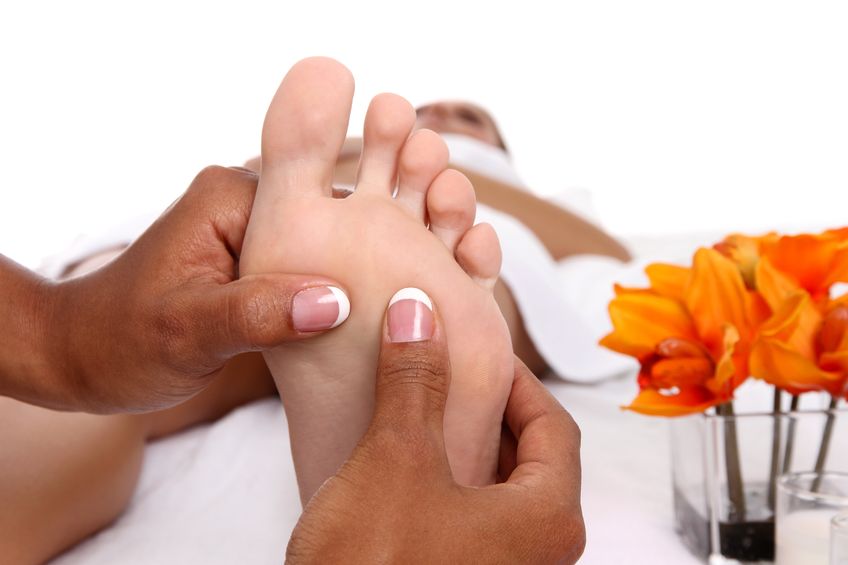
Therapeutic Reflexology works on reflexes (nerve endings) on the feet, hands, face, ears, and body. As Therapeutic Reflexologists, we are known for working on people’s feet. Yes, it may sound strange that working on somebody’s feet may actually have a positive effect on the rest of the body, but that is exactly what happens.
Therapeutic Reflexology relaxes the body and assists the body to be in an optimal state of relaxation leading to bodily chemicals like endorphins to be released in the body that helps the body to heal itself or at least attempts to balance itself from the inside out. The fact that it works and that it is very effective can be observed through many patients that have experienced positive results.
You may argue that it is merely a placebo effect and that it is based on suggestion rather than actual facts. I would disagree with that argument as I have worked with enough children as well as mentally disabled patients that cannot be influenced by suggestion and still they have experienced positive results.
One of your Western Practitioners may have told you that reflexology is airy-fairy and not worth your time because he or she does not believe in it. That is not strange and numerous practitioners may be totally against any form of complementary or alternative medicine and therapy, but just because one practitioner does not believe it works, does not give him or her the right to discredit a recognised healthcare profession in South Africa. There are numerous Western Practitioners that fully support Therapeutic Reflexology. As you will find out in the world of medicine and healthcare, practitioners do not always agree with each other, not even about their own field, how much more when it is regarding a field they are not trained in.
It should be noted that Therapeutic Reflexologists are not medical doctors and therefore they are not allowed to diagnose or make any alterations to patients’ medical treatment and medicine and they are legally not even allowed to say anything negative about the medical treatment patients undergo. Therapeutic Reflexologists stay within their scope of practice and training. What should also be understood, is that your medical doctor is excellent at diagnosing and treating medical conditions, but they are not Therapeutic Reflexologists and not trained in Therapeutic Reflexology; thus, their opinion about the profession of Therapeutic Reflexology is based on personal preference and not necessarily on fact. Keep that in mind.
You may say that Therapeutic Reflexology is an Eastern practice and should not be used in Western society. Well, then you should also not make use of your medical doctor, because many of the modern-day medical practices also originated or were used in the Eastern world before it was used in the Western world. Also, just because reflexology was used thousands of years ago in certain countries, does not mean that the profession of therapeutic reflexology is based on those age-old practices. Reflexology grew in the Western world from the 1800s to what it is today; a recognised healthcare profession that is based on science, not on airy-fairyness.
That is a good point, you may say: Where is the science? Well, there are numerous studies that have been done that indicated the effectiveness of reflexology in certain conditions. A few studies may be seen on the Reflexology Association of Canada’s website by clicking here.
As you can see, there are numerous studies available indicating the effectiveness of reflexology and there are constantly more and more research being done since reflexology is such a popular healthcare modality.
Yes, it is true that in therapeutic reflexology there are certain things based on observation rather than scientific fact, but so it is in modern medical science as well. Just to give you an example: It is a well-known fact that one of the signs doctors use to diagnose diabetes with, is excessive thirst. However, there is no clear anatomical link between the pancreas and the tongue, yet, it is still accepted as a sign and symptom that may indicate diabetes. This is just an example of how medical science also makes use of observational evidence as an acceptable method because it has been observed regularly within a practice. Therapeutic Reflexology also uses observational evidence as an acceptable method, so just because there is not a clear scientific explanation behind the observation, does not make it less true.
Therapeutic Reflexology is not an airy-fairy pseudoscience, it is a formally recognised healthcare modality in South Africa based on previous scientific studies, based on observational evidence and based on continuous new research studies being conducted. It is a growing profession and as the profession grows, more and more research will become available and as the research findings increase, the more scientific explanations will become evident.
What should be noted, is that Therapeutic Reflexology is a formally recognised and professionally regulated profession in order to ensure the best interest of patients at all times. Therapeutic Reflexology can do no harm and will only benefit the body; if only by reducing stress, that is already a huge benefit to the human body that all registered practitioners will agree to.
It is concluded that Therapeutic Reflexology is not airy-fairy, but a professional healthcare modality, but don’t take my word for it. Make an appointment with a registered Therapeutic Reflexologist and experience a treatment for yourself.
What do you have to lose? Only your current stress levels!
—
Christo A. Scheepers: Therapeutic Reflexologist
Dip.T.R.(Cum Laude) [IARAMT]
AHPCSA: A11945
Pr. No.: 1080000737453
Tel. 072-800 7243