Polycystic Ovary Syndrome (PCOS) is a hormonal disorder condition experienced by many women and in today’s post, we’ll consider PCOS from a Therapeutic Reflexology perspective.
PCOS Overview
Women have male and female sex hormones in the body, but when the male hormone level rises above the small amount it should be, it may cause PCOS; a name referring to cysts that may form in the ovaries, although some women with PCOS do not have any cysts.
The cause of PCOS is not known, but it may be hereditary, due to excess androgen or excess insulin or as a result of inferior inflammation.
The symptoms may vary, but usually affects a women’s menstrual cycle by causing missed uneven, sporadic, or extended menstruation. It may also result in excessive body hair or thinning of hair or even hair loss, acne, oily skin, and increased weight, especially in the abdominal region. Women with PCOS may experience infertility and struggle to fall pregnant.
NHS (2019) indicates that women experiencing PCOS may be at increased risk to develop cholesterolemia (high cholesterol), depression, diabetes (type 2), hypertension (high blood pressure), and sleep disorders.
PCOS is usually diagnosed with blood tests and ultrasounds, so if you suspect that you may be experiencing signs and symptoms relating to PCOS, it is a good idea to make an appointment to visit your diagnostic practitioner for a diagnosis. PCOS may have an onset at different ages from the time of menstruation in the teenage years.
Treatment of PCOS may vary but may include lifestyle changes, dietary changes, medication, symptomatic treatment, and sometimes even surgery. Complementary and Alternative Medicine (CAM), especially Therapeutic Reflexology, is often used in an attempt to alleviate signs and symptoms. The PCOS may never be cured, but relief may be possible.
Therapeutic Reflexology for PCOS
Therapeutic Reflexology is often used as a CAM modality as part of the treatment regime for PCOS. Therapeutic Reflexology is a registered and formally regulated healthcare modality in South Africa and as such, is part of a multidisciplinary healthcare team offering a treatment that is not only non-invasive but works well alongside any other medical treatment without clashing with it. Therapeutic Reflexology has the potential to help and improve quality of life, but never to harm or cause any harm to the person.
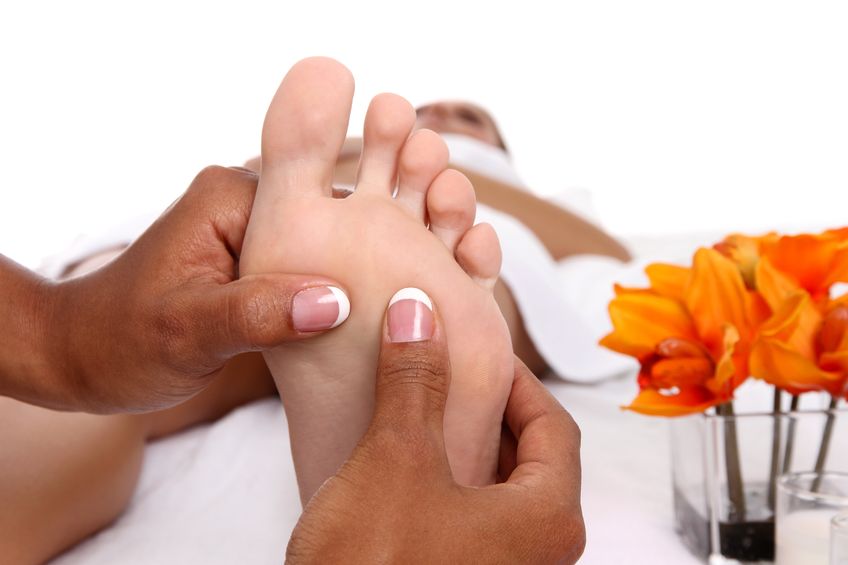
Therapeutic Reflexology offers a pressure point treatment on the reflexes (or nerve endings) on the feet (and sometimes other body parts like the hands, face, and ears). It is non-invasive and the person does not even have to get undressed to receive the treatment, making it an ideal healthcare modality to consider, even for teenagers.
Therapeutic Reflexology is a relaxing treatment and helps the body to heal itself (or at least, attempt to balance itself) from the inside out. Therapeutic Reflexology increases circulation while assisting the elimination of toxins while assisting the body to balance hormonal levels and any other imbalance in the body in order to move towards balance or homeostasis.
The Practice of Christo Scheepers Therapeutic Reflexologist
I have been doing Reflexology since 2003 and have worked with many females experiencing signs and symptoms of PCOS, some with good results while others may not have received the desired results, but definitely experienced improved quality of life results.
As a male therapist, I’m always aware of the privilege it is to work with a female patient, and therefore it is of the utmost importance in my practice to ensure the benefit and comfort of the patient without ever making the patient feel exposed or uncomfortable. As a result, I have successfully worked with many females from the young age of 10 to the mature age of 90; all without ever feeling uncomfortable.
As the patient’s peace of mind is important in my practice, it should be noted that if you ever feel uncomfortable with me as a therapist, you may just mention it to me and I’ll gladly refer you to a female colleague if that will make you feel more comfortable. That being said, it is with great humility that I can profess that I have never had a female patient that commenced treatment ever feel uncomfortable and requesting a referral, but sometimes it happens before treatment commences when the patient realises that I’m a male therapist and they may not have been aware of it when contacting me initially. The patients that are willing to take the first step and make the first appointment, are usually surprised that they feel so comfortable with a male therapist.
I have been privileged to have a special interest in women’s health and as a result, have treated many women of different ages. Therapeutic Reflexology is a non-invasive therapy and thus the patient will never feel exposed or uncomfortable during treatment, even if the presenting complaint is a female condition like PCOS.
If you are experiencing signs and symptoms of PCOS, why not consider making a Therapeutic Reflexology appointment and seeing if it may work for you?
Reference List
Johns Hopkins Medicine. (2021) Polycystic ovary syndrome (PCOS). [Online] Available from: https://www.hopkinsmedicine.org/health/conditions-and-diseases/polycystic-ovary-syndrome-pcos [Accessed 22 February 2021].
Mayo Clinic. (2020) Polycystic ovary syndrome (PCOS). [Online] Available from: https://www.mayoclinic.org/diseases-conditions/pcos/symptoms-causes/syc-20353439 [Accessed 22 February 2021].
NHS. (2019) Polycystic ovary syndrome. [Online] Available from: https://www.nhs.uk/conditions/polycystic-ovary-syndrome-pcos/symptoms/ [Accessed 22 February 2021].
—
Christo A. Scheepers: Therapeutic Reflexologist
Dip.T.R.(Cum Laude) [IARAMT]
AHPCSA: A11945
Pr. No.: 1080000737453
Tel. 072-800 7243