Psychosomatic conditions are seen as physical conditions of pain, discomfort or illness that is either caused by underlying emotional, psychological, mental or even spiritual reasons. I have been dealing with psychosomatic conditions in people as a counsellor since 1999 and as a reflexologist since 2003. As such I am also a member of the American Psychosomatic Society.
Sometimes a person experiences a specific sign, symptom or condition and after extensive medical investigation no physical cause can be established. In those instances, a psychosomatic condition is usually diagnosed and often following that is a phrase people do not like: “medically, we cannot do anything for you”. Have you ever heard those words? Well, I have, not only in many patients ending up with me for therapeutic reflexology, but I have even heard those words personally in my own life as well.
Personal Experience
I was a young man of 20 years old when I heard those words for the first time from the mouth of a medical doctor. I did a scuba dive in Port Alfred and we went in a bit deeper underwater that expected due to rough seas in order to get under the surge. On the way up, we descended faster than we should have due to the rough seas. The next day I experienced tremendous pain in my left hamstring and sciatic nerve and immediately went to see a doctor; thinking I may have the bends due to the scuba dive.
The doctor said I do not have the bends and he cannot find anything wrong. It was good news that I did not have the bends, because I loved scuba diving, especially shark diving and that meant I can continue the sport or hobby if you want, that I really loved. The bad news is that the pain in my leg was really bad and became worse by the day. Eventually it ended up to be so severe that I could not walk normally and was limping; the pain was severe. So started a medical journey in order to find a solution to the pain, because a young 20-year old man does not want to have pain and walk like an old man. I went from one doctor to the next; from a General Practitioner (GP) to an Orthopaedic Surgeon, from a physiotherapist to MRI Scans and so it went. Eventually a doctor told me that there they cannot find anything physically wrong with me and I should make peace with the fact that I would be limping for the rest of my life. I did not like that answer at all.
This thing continued for about a year and at that stage I was studying Christian Counselling and as part of the counselling training, we were encouraged to receive counselling before we could counsel any person. During such counselling session, the counsellors highlighted a spiritual matter in my life that needed attention. Once that matter was dealt with, the pain in my leg totally disappeared and that was in the year 1999 and ever since then I never had the problem again and needless to say, I’m not limping around as the medical profession told me will happen, but I live a normal pain free and non-limping life.
This is just an example of how I personally experienced a psychosomatic condition in my own life. I can promise you, when you experience such physical pain, you will not believe (just as I did not believe) that the origin of the pain is actually not physical, but on an emotional or even psychological level.
Working Experience
I started working with people in 2000 from a counselling perspective and since 2003 from a reflexology perspective. I combined the two modalities in a private practice in Port Elizabeth in 2005 and also worked in a Netcare hospital in the city, mostly with trauma patients.
At that state I worked with numerous people experiencing psychosomatic conditions and saw tremendous results; even from the patients that ended up with me after the medical profession gave up hope. It was at that stage that I realised that when somebody experienced a severe trauma, but did not deal with it, it can eventually end up as a psychosomatic condition and then the person would experience physical symptoms later in life, but the root cause of the symptoms is actually on an emotional or even spiritual level.
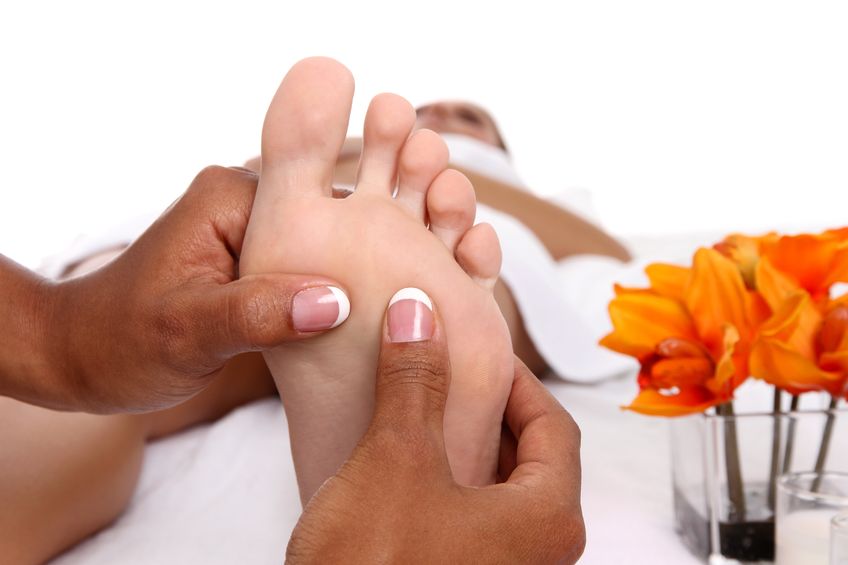
I have been working with such patients ever since, but in 2016 decided to exclusively deal with all conditions from a therapeutic reflexology perspective. I wanted to “specialise” in feet and focus all my working attention on one area and decided to do so within the modality of therapeutic reflexology. I have thus experienced first-hand how numerous patients have experienced relief of their symptoms through therapeutic reflexology; it is not uncommon for patients to experience excellent pain relief through the modality of therapeutic reflexology.
Consider therapeutic reflexology
Maybe you are experiencing pain, signs, symptoms or conditions that does not seem to be relieved or does not seem to have a cause. That is perhaps the time to consider therapeutic reflexology as a complementary healthcare modality in order to see if it will work for you.
When saying that, a few matters come to mind. Firstly, therapeutic reflexology is not a replacement for medical advice and should never be seen as an alternative to medical treatment, but it should be seen as a complementary therapy. That means it is an ideal healthcare modality to complement medical treatment. Within the scope of practice of therapeutic reflexologists, patients can be offered therapy in combination with any other medical, healthcare or psychological treatment being received.
Secondly, therapeutic reflexology does not guarantee any results. Each person reacts differently to healthcare modalities and so also with therapeutic reflexology. You are a unique individual and as such how you react to therapeutic reflexology will be unique for you and you cannot compare yourself to another person and what they experienced.
Thirdly, especially for psychosomatic conditions, it is very rarely that a person will experience any form of relief after only one treatment and a few sessions are usually recommended. Each person reacts differently to treatment; one pay experience relief of improvement after the first session, but for others it may take a few sessions; usually two to three sessions, but sometimes between five and ten. If no improvement is experienced, the therapeutic reflexologist will discuss it with the patient and either discontinue treatment or refer to another professional for further assistance, perhaps in combination of therapeutic reflexology.
Fourthly, therapeutic reflexology is not a miracle cure or something to cure all conditions, but it is definitely an excellent complementary modality to consider.
If you have considered making use of therapeutic reflexology and never had the opportunity to do so, maybe today is the day to take the first step and to make the appointment to consider the benefits of this healthcare modality.
—
Christo A. Scheepers: Therapeutic Reflexologist
Dip.T.R.(Cum Laude) [IARAMT]
AHPCSA: A11945
Pr. No.: 1080000737453
Tel. 072-800 7243
Member of: