Stress Awareness Month
April is Stress Awareness Month.
In today’s post, we’ll creatively consider this clichéd topic of stress and have a look at where Therapeutic Reflexology might provide value.
1. The Scenario
Stress moved in quietly.
It didn’t knock. It didn’t announce itself. It just began rearranging things, your sleep schedule first, then your appetite, then your attention. It’s subtle like that. It doesn’t break the door down; it changes the locks while you’re inside.
At first, it seemed helpful. It reminded you of deadlines, kept you alert in meetings, nudged you to check your phone just in case something important happened. Stress is very good at pretending to be useful.
But then it started overstepping. It began speaking for you, finishing your thoughts with worst-case scenarios. It sat beside you at night, replaying conversations you thought were over. It woke up earlier than you did.
The strange thing is that you never asked it to leave. Not because you wanted it there, but because you stopped noticing it was a guest.
Maybe the problem isn’t that stress exists. Maybe it’s that we’ve mistaken it for part of the furniture; for a normal part of life.
2. The Reality
Stress has become part of modern-day existence, and we may not even notice it anymore because we became used to it just always being there. When you are asked, are you stressed? Your immediate reaction is, no, not at all! However, your stress levels may be very high but as you have become accustomed to it being there, you have been desensitised, and you may believe that it is just how life if.
Contemporary life has made us brush over stress as if it is meant to be there. At first stress is helpful as it makes you meet deadlines and you become used to living off the adrenaline rush, and there is nothing wrong with that. Your body is made so amazing that it can handle stress and it may have some positive effects like that.
The problem occurs when stress becomes a long-term companion, and it settles into your life as if it belongs there. Living off adrenaline for a short period is not a problem at all, but when your body keeps on excreting adrenaline as if you are constantly in a fight-or-flight situation, then it becomes problematic.
3. The Body
It begins before you notice. Your heart rate elevates slightly. Your breathing becomes shallow, almost polite, as if trying not to disturb anything. Muscles tighten in small, efficient ways; the jaw, the shoulders, the neck; all the places you forget to check.
This is the Fight-or-flight response doing exactly what it was designed to do: prepare you to either fight danger or to flee from it. The problem is not the response. The problem is the absence of resolution. Your body is waiting for a signal that the danger is over, but it never comes. No escape. No confrontation. Just continuation.
So, the system stays active. Quietly. Persistently. And over time, what was meant to be temporary becomes your new normal. You don’t feel stressed anymore. You just feel like yourself.
The problem is that you were never meant to live in such a heightened state continuously.
4. The Perspective
When talking about stress, we usually revert to techniques on how to overcome it and you may attend a stress workshop just to leave more stressed because by taking time off to attend, your work piled up causing you even more stress.
Instead of looking for another technique, another routine or another optimised way of reducing stress, what about a different approach? Instead of tracking, measuring or attempting to control stress as if it is an external force that you may negotiate with, why not change your view about stress? Instead of seeing stress as an external force, a response to life, why not rather see stress as a reflection of how your life is currently structured?
Thus, instead of asking, “how do I eliminate stress?”, rather ask the following:
- “What would a life look like where stress is no longer the default setting?”
- “Why doesn’t that life already exist for me?”
5. The Outcome
Imagine your life being different. Imagine not living from alarm clock to time schedules to deadlines. Imagine you do not have constant emails to attend to, no constant messages keeping you occupied, no urgent matters that were supposed to be completed yesterday already, although you only received the instruction today. Imagine somebody blue ticks your message and it does not cause you spiral into your mind wondering what you have done wrong or what you have not done or what you could have done better.
Does it sound like an illusion? Maybe you cannot control what life and work throws your way, but you are able to put boundaries in place and to prevent stress from becoming part of your life journey.
Determine what makes you happy, what calms you, what clears your mind, and then purposefully make that part of your life. If that means that you have to say “no” to certain things, then put that boundary in place. If that means that you must schedule some time for you to recuperate, then put that into your schedule.
Therapeutic Reflexology may be the ideal therapy to assist you in the process. As a regular patient told me the other day, “stress has become part of my life, and I only realised how stressed I am when you work on my feet; I can literally feel the stress leave my body and my mind switching off.” Another patient told me that she enjoys the regular therapeutic reflexology sessions because that is an hour or two that she takes for herself during the week where nobody bothers her and where she gets to just relax and recuperate.
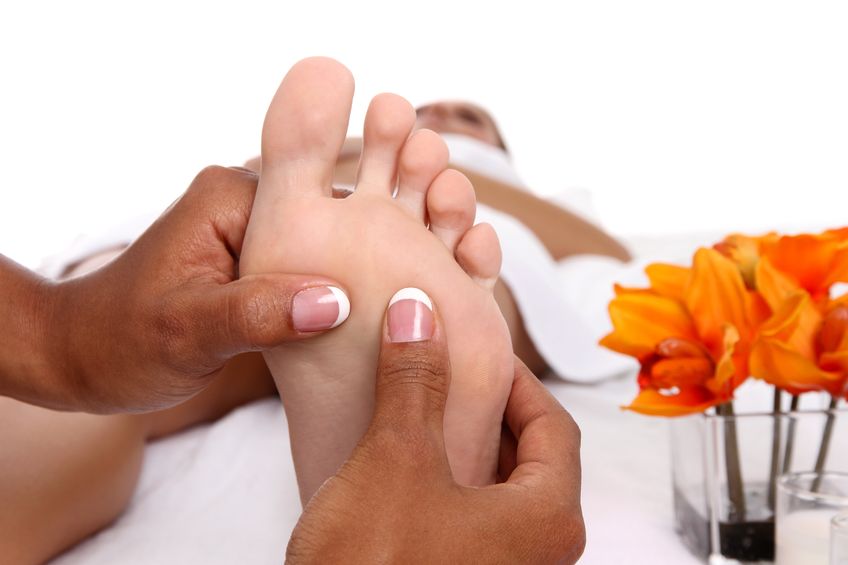
That is the benefit of Therapeutic Reflexology, it is one of the best therapies available to help you manage constant stress in your life. While the Therapeutic Reflexologist stimulates the reflexes (nerve endings) on your feet (and sometimes other parts of the body), your body realises it should eliminate excess adrenaline and cortisol levels and your body moves from the fight-or-flight mode into rest-and-digest mode. Your physically calm down while your mind and emotions follow suite and you completely relaxes during a session. The best part is that once you leave the Therapeutic Reflexology session, your body, mind and emoitions continue to rebalance into a state of calmness while keeping you relaxed for longer than the booked therapy session.
Therapeutic Reflexology is excellent at helping you take control of stress and to keep it under control. Do not take my word for it, make your appointment with a properly qualified, Allied Health Professions Council of South Africa (AHCPSA) registered and regulated Therapeutic Reflexologist and experience it for yourself.
April is stress awareness month, so no time like the present to consider Therapeutic Reflexology in changing your narrative about stress.
—
Christo A. Scheepers: Therapeutic Reflexologist
DTR (Cum Laude), PhD
AHPCSA: A11945
Pr. No.: 0737453
Tel. 072-800 7243