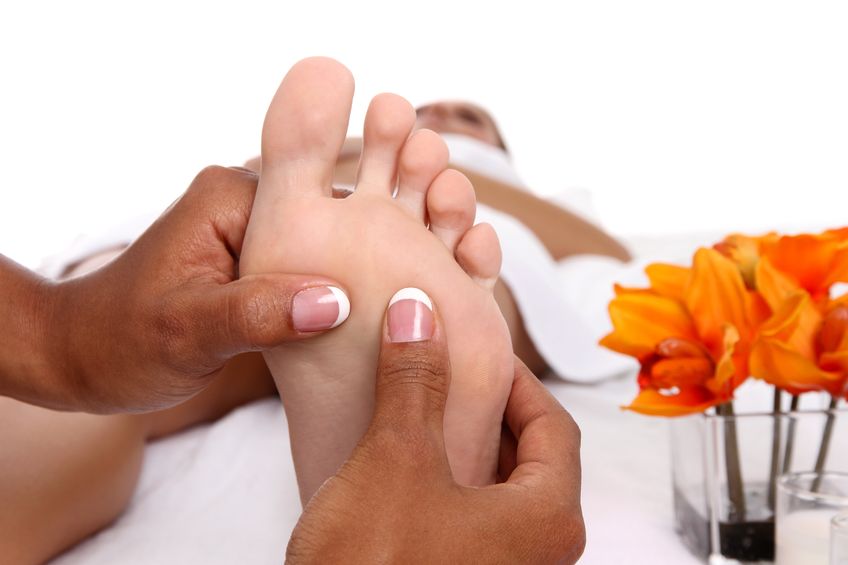
Therapeutic Reflexology is a valuable healthcare modality that may be classified as both an art and a science. In today’s post, we’ll consider Therapeutic Reflexology as an art and a science.
Therapeutic Reflexology is a recognised healthcare modality formally regulated by the Allied Health Professions Council of South Africa (AHPCSA), making it not only a professional healthcare modality but also one that is safe for the public to use due to minimum qualifications, practical experience and formal registration with a statutory council that is requirements in order to legally practice in South Africa. There is no way around this; a short course in reflexology does not qualify a person to practice legally in South Africa. These are the legal aspects of the profession of Therapeutic Reflexology, but it is more than just a profession complying with legislation, it is truly a healthcare modality based science, practiced as an art.
Therapeutic Reflexology is a science as it is has a scientific foundation. This statement may sound strange as you may sometimes hear on the internet that there is no scientific evidence for reflexology. There are numerous scientific studies available clearly showing the effectiveness of reflexology in many instances. Let’s break this down slightly when saying that Therapeutic Reflexology is based on different sets of scientific evidence and just because a certain individual does not believe in the science, does not make it less scientific.
Firstly, Therapeutic Reflexology is based on sciences well-known in the Western world like Anatomy, Physiology, Pathology, and Pathophysiology. Anatomy deals with the make-up and the different parts of the human body. Physiology deals with the working of the human body. Pathology deals with disease and the effect disease have on the human body. Pathophysiology deals with the functioning of the human body while dealing with a disease. These are all well-known sciences in the Western fraternity of medicine. Added to that are sciences relating to lifestyle, exercise, diet, and so forth; all evidence-based sciences.
Secondly, Therapeutic Reflexology is based on Chinese Medicine Theory which may not be so well known in the Western world, but it provides valuable additional insights into dealing with patients holistically by taking into consideration not only the physical signs and symptoms but also the influence of emotions, mindset and even spirituality. It provides added value to the Therapeutic Reflexologist to understand the patient as a person instead of merely a machine with different parts, but instead as an integrated being with different aspects. This is also a valid scientific theory, but not always so well-known in the Western world, but that does not take away from a scientific basis.
Thirdly, Therapeutic Reflexology is based on empiricism. That sounds like a big word, but it basically means that over time, certain observations have been made in clinical practice and as a result of these observations, we know that when doing something it may lead to something else, although there may not yet be enough scientific evidence to explain it as more research may be needed, it does not take away from the fact that it is being observed. You may think that this is not science, but actually it is. Empirical research is a valid method of obtaining information, even in the Western world, just read a bit more about research methodology. Just think back a few hundred years; there may not have been scientific evidence that certain medical procedures work, but the fact that it worked, did not make it “less scientific”, it was used until today we have the science to back it up; that is an empirical approach. Just because you put a cold cloth on a feverish forehead, may not have been accompanied by science when your great grandmother did it, but it still worked and the procedure is still being used today when people experience a high fever, but today we know that a high fever can cause irrevocable damage to the human body as explained by science. Our great grandmothers did not know of such science, they just knew that using a cold cloth on a feverish forehead may lead to the person feeling better and the fever being handled.
That is the science of Therapeutic Reflexology. Keep in mind that just because you are not aware of the science, it is not necessarily absent.
Therapeutic Reflexology is more than a science, it is also an art.
What is meant by the fact that Therapeutic Reflexology is an art, is simply that each therapist may develop their own unique approach to treatment. When studying to become a Therapeutic Reflexologist, every student is taught the exact same therapy techniques, but how these techniques are applied in practice, may differ from therapist to therapist as each therapist will develop their own unique style and that is almost like an art. We all know the basic techniques, but how the techniques are applied, may be different for each Therapeutic Reflexologist.
Therapeutic Reflexology is like an art; all artists may know the techniques to use, but the way it is used on a canvas or when developing a piece of art, differentiates the one artist from the next. Each Therapeutic Reflexologist develops their own way of providing treatment and not all approaches may resonate with a patient and therefore you may be honest with your therapist because if you do not feel comfortable with a specific approach, the approach may be adjusted or you may be referred to a different Therapeutic Reflexologist where you may feel more comfortable.
It is crucial for patients to be at ease with the Therapeutic Reflexologist because you need a safe, comfortable, and relaxed space where you may obtain the best possible results from the treatment. Be honest with your Therapeutic Reflexologist, we are trained professionals and will not feel offended if you ever want to discuss something you may feel uncomfortable with or if you need a referral to a different therapist. As professionals, Therapeutic Reflexologists will always be open to discuss their qualifications, experience, and registrations. It is the patient’s right to ask!
Therapeutic Reflexology is an art and a science, but the best way of knowing what it is all about, is to practically experience a Therapeutic Reflexology session from a properly qualified, experienced and formally registered and AHPCSA regulated Therapeutic Reflexologist.
—
Christo A. Scheepers: Therapeutic Reflexologist
Dip.T.R.(Cum Laude) [IARAMT]
AHPCSA: A11945
Pr. No.: 1080000737453
Tel. 072-800 7243